‘to stick out a mile’: meaning and origin
New Zealand, 1883, as ‘to stick out half a mile’—to be very prominent or conspicuous
Read More
“ad fontes!”
New Zealand, 1883, as ‘to stick out half a mile’—to be very prominent or conspicuous
Read MoreAustralia, 1943—a foolish or silly person—from the synonymous noun ‘dill’ (1933), itself apparently a back-formation from the adjective ‘dilly’, meaning ‘foolish’, ‘silly’
Read MoreUSA, 1871: a person who frequently uses or coins slang words and phrases—USA, 1926: a person who studies the use and historical development of slang—blend of the nouns ‘slang’ and ‘linguist’
Read MoreUK Parliament, 1902: rapid verbal exchanges between two parties—Queensland Parliament, 1902: the to and fro of amendments to bills between two Houses of Parliament
Read MoreAustralia, 1865 (nonce-use): the process of turning into a person of high social rank—UK, 1964 (coined by sociologist Ruth Glass): the process whereby middle-class people take up residence in a traditionally working-class area of a city
Read More
has been colloquially used to express a great variety of notions, in particular ugliness and madness, but also unpleasantness, unpredictableness, agitation, disturbance, etc.
Read More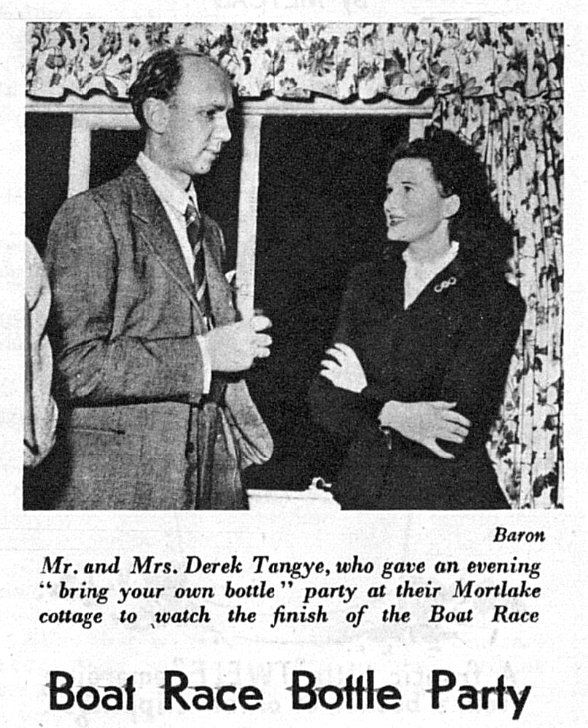
a party to which attendees are encouraged to bring their own drinks, especially alcohol—‘bring-your-own-bottle party’: USA, 1923, in the context of Prohibition—‘bring-a-bottle party’: UK, 1928
Read MoreAustralia, 1986—used as an assurance that all is fine, or to express one’s agreement or acquiescence—euphemistic alteration, with switching of the initial consonants, of ‘no fucking worries’
Read MoreIreland, 1832—particularly associated with Lord Robert Armstrong and the ‘Spycatcher’ trial (1986)—‘economy of truth’ was used in 1796 by Edmund Burke
Read MoreUK, 1894—a love-relationship in which one member of a married couple is involved with a third party—loan translation from French ‘triangle éternel’, coined by Alexandre Dumas fils in L’Homme-Femme (1872), a pamphlet about a wronged husband’s right to take the life of his adulterous wife
Read More
