a Lancashire phrase: ‘the full monty’
something in its entirety—UK, 2nd half of 20th cent.—the sense of striptease performance involving full nudity was popularised by the 1997 film The Full Monty.
Read More
“ad fontes!”
something in its entirety—UK, 2nd half of 20th cent.—the sense of striptease performance involving full nudity was popularised by the 1997 film The Full Monty.
Read More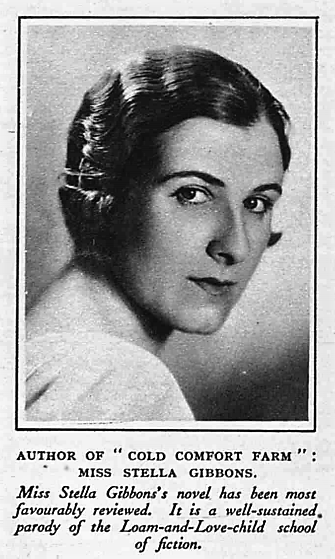
UK, 1930s—from Cold Comfort Farm (1932), by Stella Gibbons, in which a character exploits a traumatic childhood experience to exert control over her family
Read More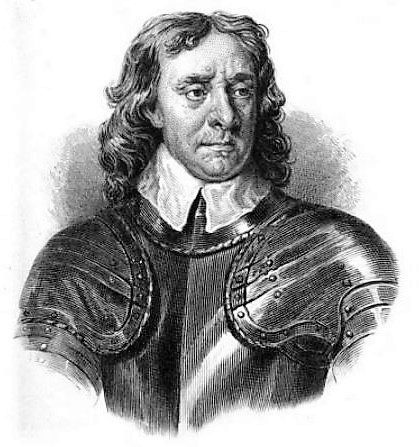
said to have originated in Oliver Cromwell’s instructions to the painter Peter Lely to represent him as he truly was, without concealing his blemishes
Read More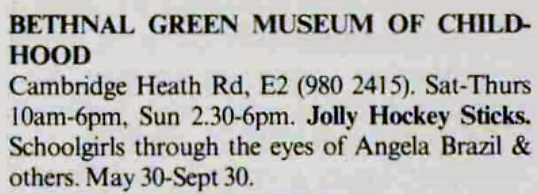
BETHNAL GREEN MUSEUM OF CHILDHOOD Cambridge Heath Rd, E2 (980 2415). Sat-Thurs 10am-6pm, Sun 2.30-6pm. Jolly Hockey Sticks. Schoolgirls through the eyes of Angela Brazil¹ & others. May 30-Sept 30. from The Illustrated London News – May 1984 (¹ Angela Brazil (1868-1947), British author of schoolgirls’ stories) The exclamation jolly hockey stick(s) is […]
Read More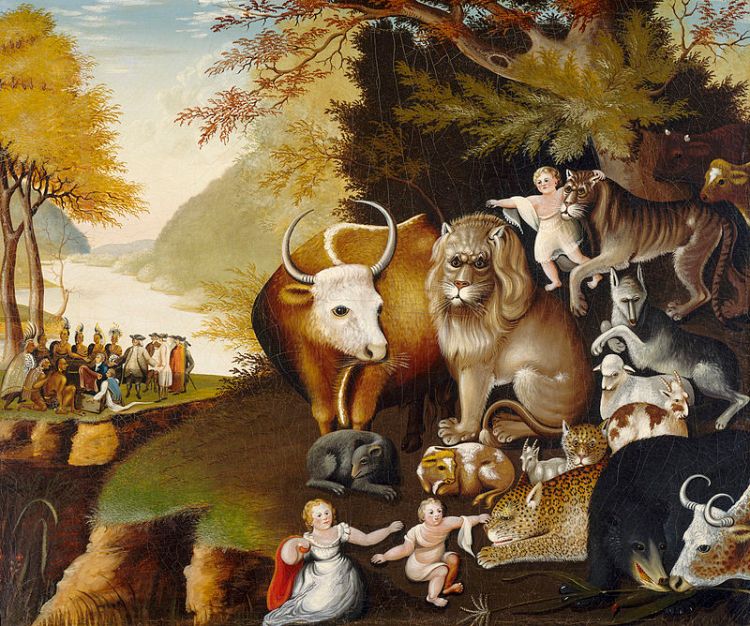
one of the versions of The Peaceable Kingdom (circa 1834), by Edward Hicks image: National Gallery of Art (Washington DC) The expression peaceable kingdom, in the sense of a state of harmony among all creatures as prophesied in the Book of Isaiah, 11:1-9, first appeared in the King James Version (1611): […]
Read More
“HUNS KILL WOMEN AND CHILDREN!” “TELL THAT TO THE MARINES!” First-World-War US recruiting poster by James Montgomery Flagg image: Disappearing Idioms This poster, which attracted a great deal of attention, portrays an angry-looking young man in the act of pulling off his coat as though he were anxious to get into a fight. The […]
Read More
Le Rhesus (Simia Rhesus) – illustration by Jean-Baptiste Audebert for his treatise, Histoire naturelle des singes et des makis (1799) – image: Bibliothèque nationale de France / gallica.bnf.fr This word is from French rhésus, formerly rhesus, and from its etymon, the scientific Latin (Simia) Rhesus. In Histoire naturelle des singes et des makis (Natural […]
Read MoreThe noun pastis designates an aniseed-flavoured aperitif, while pastiche, or pasticcio, denotes a work of art that imitates the style of another artist or period and a work of art that mixes styles, materials, etc. Unlikely as it may seem, these words are doublets, or etymological twins: although they differ in form and meaning, they go […]
Read More
A drawing of Peeping Tom, in the exact state in which he is carved, but divested of all paint and superfluous ornaments. W. Reader in The Gentleman’s Magazine: and Historical Chronicle (London) of July 1826 The Coventry Peeping Tom statue, which dates from around 1500, survives today. Though it is now stripped down to […]
Read More
cover of The Great Panjandrum Himself (1885), a picture book based on the text attributed to Samuel Foote, by the English artist and illustrator Randolph Caldecott (1846-86) – photograph: Aleph-Bet Books MEANING a pompous self-important official or person of rank ORIGIN The word is supposed to have been coined in […]
Read More word histories