the educated sections of society, considered as enjoying discussion of political, social and cultural issues—coined in 1980 by British journalist Frank Johnson, but had occasionally occurred from 1840 onwards
a person with facial acne—Californian high-school slang, 1963—in this expression, the pimples caused by facial acne are likened to slices of pepperoni on a pizza
UK—1969: a type of collapsible trolley designed for use in the home—1970: a thing whose name the speaker cannot remember, does not know, or does not wish to mention—perhaps from ‘oojah’, ‘-ma-’ in nouns such as ‘thingamabob’, and the verb ‘flip’
‘serious trouble’—USA, 1866—from the image of taking off one’s shirt before getting into a fight, and from ‘hell’ in the sense of ‘a severe reprimand’, as in ‘to give someone hell’
USA, 1986—something intended to divert attention from something more important—refers to the fact that when two male gorillas confront each other, they throw dust in the air to distract one another—popularised, if not coined, by Henry Ross Perot
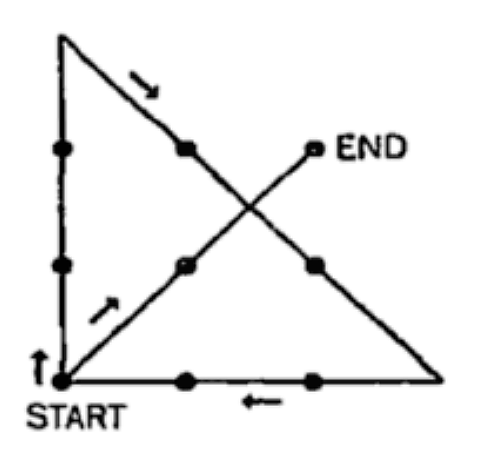
USA, 1971—to think creatively or in an unconventional manner—originated in a puzzle in which the aim is to connect nine dots arranged in the form of a square with four consecutive straight lines: the puzzle can be solved only by extending three of the lines outside the box implied by the arrangement of the dots
1980s—to become wildly or explosively angry; to become highly excited or enthusiastic; to intensify rapidly and especially alarmingly—refers to the failure of a guided missile’s guidance system (1966)
UK, 1938—old-fashioned informal British-English adjective meaning ‘in good order’, ‘fine’—origin obscure: perhaps from Hindi ‘ṭhīk hai’ (‘all right’) or from ‘the ticket’ (‘the correct thing’); or it may simply be a purely fanciful formation
‘something new can only be judged to be good or bad after it has been tried or used’ (‘proof’ = ‘test’)—1623, in Remaines, concerning Britaine, by W. Camden


 word histories