The verb ‘unfriend’ was coined in the 17th century.
The verb unfriend was coined by the Church of England clergyman Thomas Fuller (1608-61) in The Appeal of Injured Innocence (1659).
Read More
“ad fontes!”
The verb unfriend was coined by the Church of England clergyman Thomas Fuller (1608-61) in The Appeal of Injured Innocence (1659).
Read More
‘according to Gunter’: correctly; reliably—early 18th century, from the name of the English mathematician Edmund Gunter (1581-1626)
Read Moreto go off—19th cent.—from a procedure consisting in making a person walk on a straight line drawn with chalk in order to establish whether they are inebriated
Read More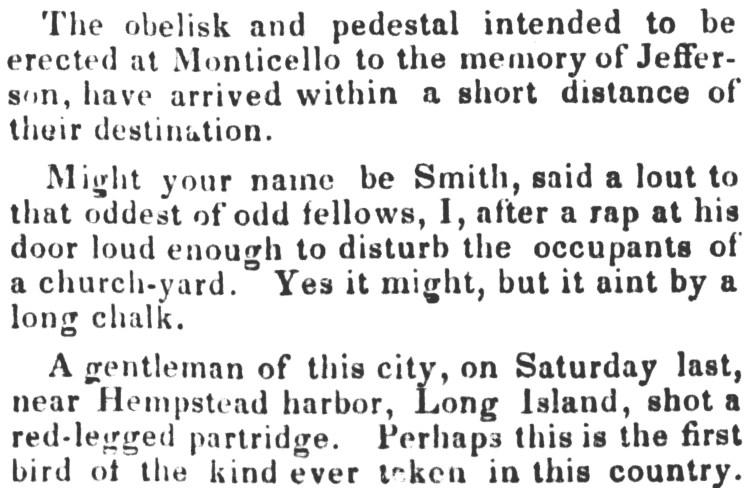
‘by a long chalk’: in a great degree, by far — 19th century, from the practice of using chalk to mark up the points scored in a game
Read More
blend of ‘adult’ and ‘adolescent’: adult who has retained the interests, behaviour or lifestyle of adolescence — origin USA, first attested in 1945
Read Morefrom ‘a bolt out of the blue’, denoting a sudden and unexpected event, with reference to the unlikelihood of a thunderbolt coming from a clear blue sky
Read More
origin: USA – 2nd half of the 19th century – from the action of making a small sign of the cross over one’s heart, which sometimes accompanies the words
Read MoreFrom the practice of using hay-baling wire for makeshift repairs, ‘haywire’ came to mean crudely made, improvised, hence disorganised, erratic, crazy.
Read More‘First catch your hare’ (early 19th cent.): originated in popular humour ascribing this phrase to ‘The Art of Cookery’ (1st published 1747), by Hannah Glasse
Read More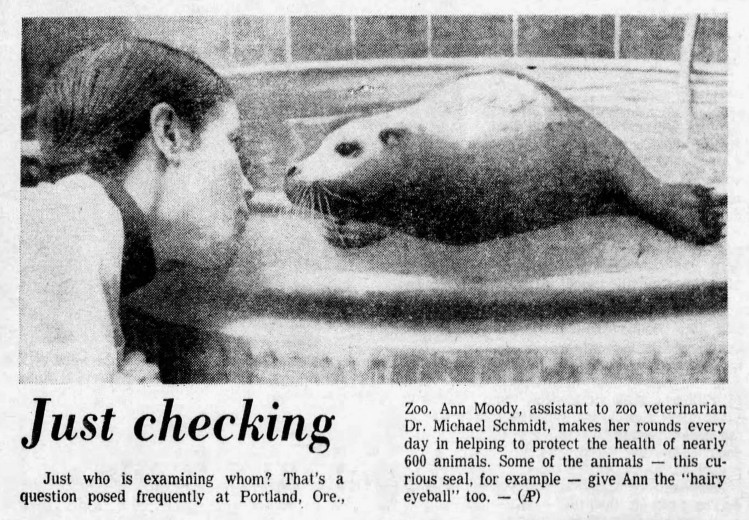
‘hairy eyeball’ (late 20th cent., USA): an intent look—refers either to the eyeballs looking ‘hairy’ when the eyes are narrowed or to batting one’s eyelashes
Read More word histories