first recorded in a speech by Rev. George W. Bethune, transcribed in ‘Brief abstract of the fourth annual report of board of Managers of the New-York city Colonization Society’, published in ‘The American Christian Instructor’ of April 1836
Of American-English origin, the colloquial phrase ‘hot under (or ‘in’) the collar’ means ‘extremely exasperated or angry’. The earliest instance that I have found is from The Chicago Tribune (Chicago, Illinois) of 8th July 1869.
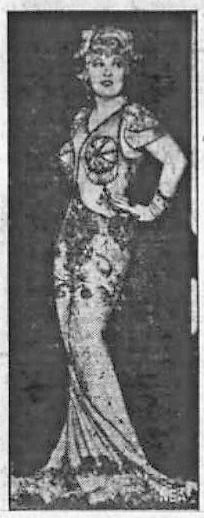
From the name of the American film actress Mae West, renowned for her generous bust, the informal noun ‘Mae West’, attested in 1940, denotes an inflatable life jacket, originally as issued to Royal Air Force aviators during World War II.
The phrase ‘all behind, like a cow’s tail’ and its variants mean ‘left behind’ and ‘late in accomplishing a task’. They appeared in print in the mid-19th century in the USA, Australia and Britain.
‘to take the Fifth’: to decline to reveal one’s own secrets—from ‘to take the Fifth Amendment’: to appeal to Article V of the original amendments to the U.S. Constitution, which states that “No person […] shall be compelled in any criminal case to be a witness against himself.”
‘dunce’: originally a follower of John Duns Scotus (circa 1265-1308), scholastic theologian; in the 16th century, Scotus’s system was attacked with ridicule by the humanists and the reformers as a farrago of needless entities and useless distinctions
U.S., 1876—‘bulldozers’: members or supporters of the Democratic Party who used threats and acts of violence in order to prevent Afro-Americans from voting for Republican candidates
UK, early 19th century—private property taken from an enemy in war—originally an Anglo-Indian noun, from Hindi ‘lūṭ’, from Sanskrit ‘luṇṭh-‘, ‘to rob’—came to be also used as slang for ‘money’ and to also denote ‘wedding presents’
The name ‘Quorn’ was first registered as a trademark—for certain edible products other than meat substitutes—by the Quorn Specialities Company of Leicester, England, in 1914. The meat substitute was subsequently developed by the successors of this company.
The literal meaning of ‘rocket science’ (USA, 1930) is the science of rockets and rocket propulsion—in the 1980s, in connexion with sports, it came to be used ironically as a generic term for anything requiring a high level of intelligence or expertise.


 word histories