‘to have straws in one’s hair’: meaning and origin
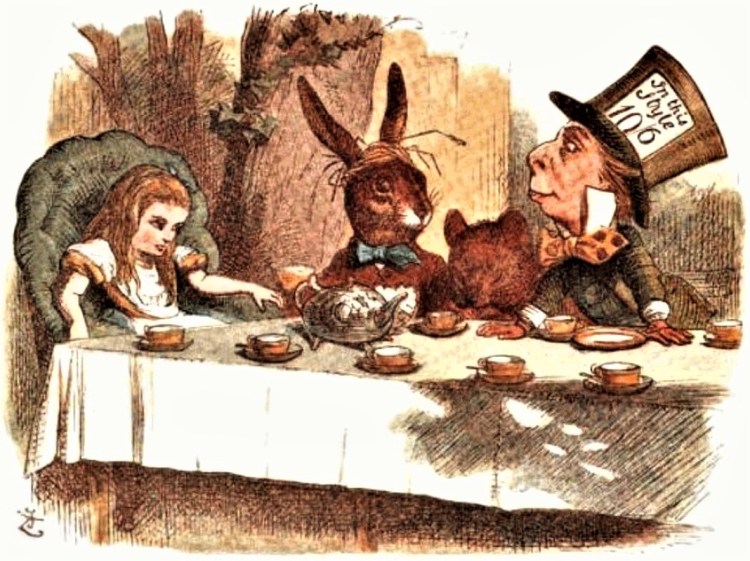
to be insane—late 19th century—originated in the fact that in 19th-century productions of Shakespeare’s ‘Hamlet’, Ophelia appeared with straws in her hair in her ‘mad scene’
Read More
“ad fontes!”
to be insane—late 19th century—originated in the fact that in 19th-century productions of Shakespeare’s ‘Hamlet’, Ophelia appeared with straws in her hair in her ‘mad scene’
Read More‘to know where the bodies are buried’: to have personal knowledge of the secrets or confidential affairs of an organisation or individual—USA, 1928, as ‘to know where the body is buried’
Read Moreused with reference to a conventional or idealised romance—originated (USA, 1931) in cinematographic plot summaries in which ‘boy meets girl’ featured
Read MoreThe original image was of throwing a monkey wrench into the cylinder of a threshing machine, and was exclusively applied to political situations—USA, late 19th century.
Read More‘hell in a handbasket’ (1841), ‘heaven in a handbasket’ (1834) in Irish contexts—‘handbasket’ chosen for alliteration with ‘hell’—‘to go to hell in a handbasket’ meant ‘to go to hell’—‘to go to heaven in a handbasket’ meant ‘to go to heaven’ or ‘to go to hell’
Read More‘a snowball’s chance in hell’: no chance at all (USA, 1880)—elliptically, ‘a snowball’s chance’ (USA, 1895)—in the 1880s, ‘a snowball in hell’ was also used as a term of comparison to denote something that disappears rapidly
Read MoreIn the phrase ‘sleep tight’ (USA, 1873), the adjective ‘tight’ is used as an adverb meaning ‘soundly’, i.e. ‘deeply and without disturbance’, as in the combination ‘tight asleep’ (USA, 1847).
Read Moremeaning: ‘there is nothing to prevent someone or something from being successful’—from a late-19th-century metaphor specifically used of poker games with ‘a sky-high limit’ on stakes
Read MoreUSA—‘to look, or to feel, (like) a million dollars’, or ‘(like) a million bucks’: to look, or to feel, extremely good, or extremely attractive (early 20th century)—sometimes used in contrast to ‘like thirty, or 30, cents’: cheap, worthless (late 19th century)
Read Moreoriginally: a child wearing the house key tied around their neck and staying in the streets while their mother is at work—USA, 1935: a poor Afro-American woman’s child—USA & UK, WWII: a child whose mother was engaged in war industry
Read More word histories