‘(as) drunk as Chloe’: meaning and purported origin
UK, 1788—very drunk—may refer to Chloe, a woman with whom the English poet Matthew Prior (1664-1721) allegedly drank, and whom he often mentioned in his poems
Read More
“ad fontes!”
UK, 1788—very drunk—may refer to Chloe, a woman with whom the English poet Matthew Prior (1664-1721) allegedly drank, and whom he often mentioned in his poems
Read More
UK, 1956, children’s slang—an act of placing both hands on a person’s wrist or arm and then twisting it to produce a burning sensation—alludes to the fiendish methods of torture attributed to the Chinese
Read More
UK, 1987—a young man who behaves in an unpleasant or aggressive manner as a result of drinking (typically lager) excessively—lager, a pale beer, is favoured by the young as opposed to the dark, traditional bitter English beer
Read Moredenotes effrontery—‘front’ denotes self-assurance, but the word that follows ‘than’ puns on ‘front’ in the sense of the façade of a building, a long seafront, etc.—also denotes a well-endowed woman, with reference to ‘front’ in the sense of a woman’s bust
Read More
‘four-leaved clover’: a rare form of clover leaf having four leaflets, regarded as a lucky charm or sign of good fortune—superstition mentioned as early as 1620—sometimes associated with ‘even ash’, a rare form of ash leaf having an even number of leaflets
Read More
the nickname that the Venetian opera audience gave to Joan Sutherland when she sang Handel’s Alcina at the Fenice Theatre on 21 February 1960—Italian ‘è stupenda’ translates as ‘she is stupendous’
Read More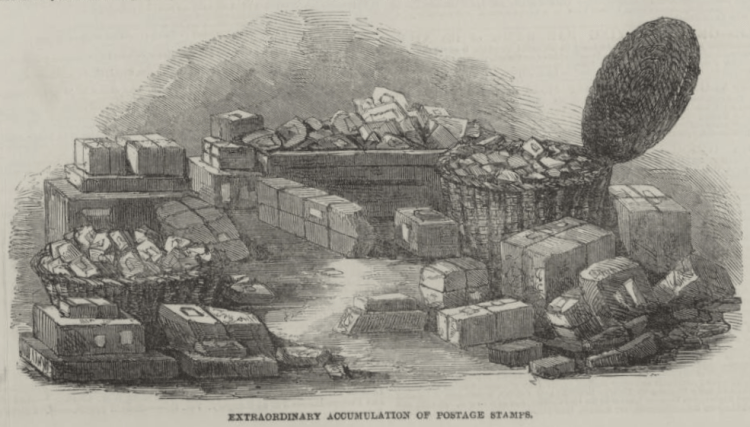
UK, 1883—The word ‘million’ in itself has something magic about it, and the belief exists that a special reward awaits the person who collects a million bus tickets, or a million used postage stamps, etc.
Read Morethe government or its policies viewed as overprotective or as interfering unduly with personal choice; a state characterised as having such a government—first coined in 1952 by U.S. journalist Dorothy Thompson—recoined in 1965 by British politician Iain Macleod
Read MoreAustralia—used to express unluckiness or unhappiness—first recorded in The Four-legged Lottery (1958), by Australian novelist Frank Hardy, who later often reused it
Read MoreUK 1945: ‘as lucky as the pox doctor’s clerk’: very lucky—UK 1954, ‘to look like a pox doctor’s clerk’, Australia 1957, ‘done up like a pox doctor’s clerk’: dressed nattily but in bad taste
Read More
