a violent street gang armed with razors—in extended use, a group or body responsible for making cutbacks—in particular: 1) (British English, railway slang): a team of investigators seeking ways of improving economy and productivity; 2) (Australian English) a parliamentary committee charged with investigating and reducing government spending
UK, 2001—used as a self-designation by persons with left-wing political views who think of themselves as being better in touch with reality than champagne socialists are—coined after, and in contrast to, ‘champagne socialist’
1695—This phrase means ‘having an appearance of respectability’. The image of a prostitute at a christening is used to indicate that a person is out of place in a particular situation.
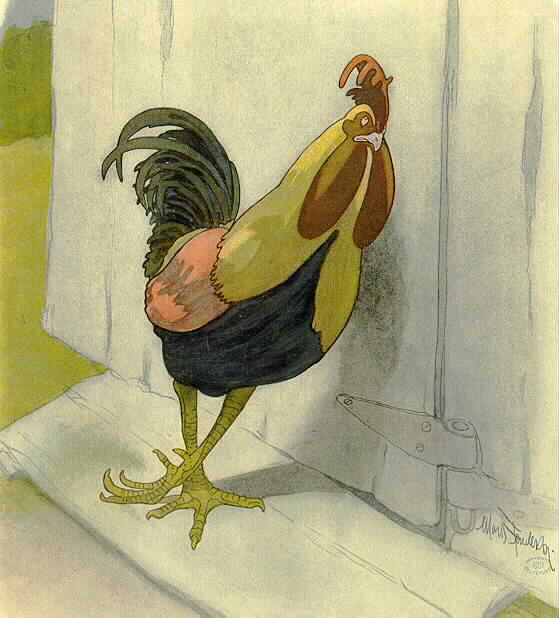
USA 1907—used of the inanity of life and of the transitoriness of success—originated in the captions to a cartoon known as ‘The Dejected Rooster’, by Mark Fenderson, published by the weekly magazine Life (New York City) in 1907
This proverb means that promises and plans must be put into action, otherwise they are useless. The early versions did not refer to hell or the road to hell being paved, but to hell being full of good desires, intentions, meanings, etc.
UK, 1907—means that dirty or unpleasant activities can be lucrative—in early use: (1735) ‘where there’s muck, there’s luck’ and (1774) ‘where there’s muck, there’s money’—the synonymous proverb ‘muck and money go together’ was recorded in 1678
There have been, since the early 20th century a number of colourful variants of the U.S. phrase ‘as busy as a one-armed paperhanger’—for example, in Australian English, ‘as busy as a one-armed taxi-driver with crabs’ and ‘as busy as a brickie in Beirut’.
UK, 1821—‘we’ used in place of ‘I’ by a monarch or other person in power, also (frequently humorously) by any individual—originated as a loan translation from French ‘nous royal’, as used of Napoléon Bonaparte by Madame de Staël in her memoirs published in 1821