‘the Ham and Egg Parade’: meaning and origin
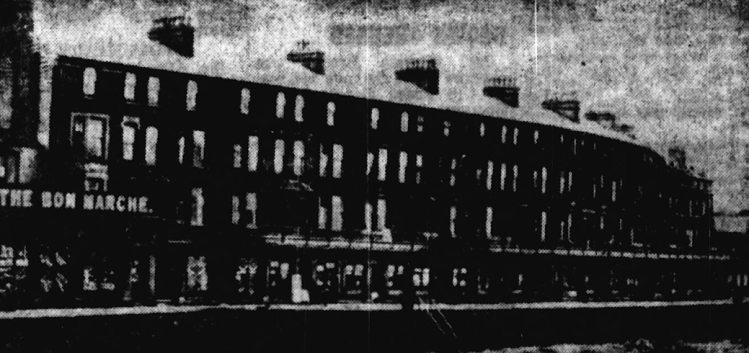
UK, 1880—a promenade at the seaside resort of New Brighton, in north-western England—alludes to the fact that cooked ham served with eggs was a popular dish at New Brighton’s eating-places
Read More
“ad fontes!”
UK, 1880—a promenade at the seaside resort of New Brighton, in north-western England—alludes to the fact that cooked ham served with eggs was a popular dish at New Brighton’s eating-places
Read More1609—to add to what is already great, also to add difficulty to difficulty—Pelion and Ossa are two mountains in Thessaly—in Greek mythology, two giants, Otus and Ephialtes, tried to pile Pelion and Ossa on Olympus in order to reach the gods and overthrow them
Read MoreUK, 1912—humorous: a Jewish person—refers to the Crossing of the Red Sea, as recounted in the Book of Exodus—coined on various occasions by different persons, independently from each other
Read MoreUK, 1826—The colloquial phrase ‘couldn’t stop a pig (in a gate)’, and variants, are used of a bow-legged person.
Read MoreUK—‘rhubarb’ is colloquially used to denote ‘nonsense’—originated in the theatrical practice consisting for a group of actors in repeating the word ‘rhubarb’ to represent an indistinct background conversation or the noise of a crowd
Read MoreLancashire, England, 1939—used in similative and comparative phrases such as ‘as —— as soft Mick’ and ‘more —— than soft Mick’, the noun ‘soft Mick’ (also ‘Soft Mick’) indicates a great quantity or degree
Read MoreAustralia, 1985—a person who espouses socialist ideals while enjoying a wealthy lifestyle—coined after the synonymous expression ‘champagne socialist’—popularised by Emerald City (1987), by the Australian playwright David Williamson
Read More
Australia, 1965—a panacea; a source of comfort; also indicates the need for a rest to settle down—originated in ‘A Cup of Tea, a Bex and a Good Lie Down’ (1965), a satiric revue by John McKellar—‘Bex’ was a proprietary name for a type of analgesic
Read MoreUSA, 1896—one-word form representing a colloquial pronunciation of the phrase ‘hell’s a poppin’’ (1875)—meaning: ‘events are unfolding in a chaotic manner’; ‘a state of confusion and disarray is taking hold’—the verb ‘pop’ means ‘to suddenly break open’
Read MoreUK, 1821—‘we’ used in place of ‘I’ by a monarch or other person in power, also (frequently humorously) by any individual—originated as a loan translation from French ‘nous royal’, as used of Napoléon Bonaparte by Madame de Staël in her memoirs published in 1821
Read More word histories