UK, 1971—a pun on ‘Kensington Gore’, the name of a thoroughfare in London, and on the noun ‘gore’, denoting blood shed from a wound—it is unclear whether ‘Kensington Gore’ (as applied to artificial blood) was originally a trademark
from the image of a speeding explosive projectile—primary meaning (of a motorcar, an aircraft, a motorcycle, an animal, a person): to move very fast—later (also ‘to go down like a bomb’ and ‘to go down a bomb’): to be very successful or popular
Australia, 1834—used in various phrases, in particular as a type of someone or something in a very bad state or condition—also in the phrase ‘all behind like Barney’s bull’, meaning ‘very delayed’ or ‘backward’—origin unknown
UK, 1934—used of a person who pretends to be well-off despite having little money—the image is of a person who has expensive curtains on the windows of their house, but subsists on a diet of inexpensive fish
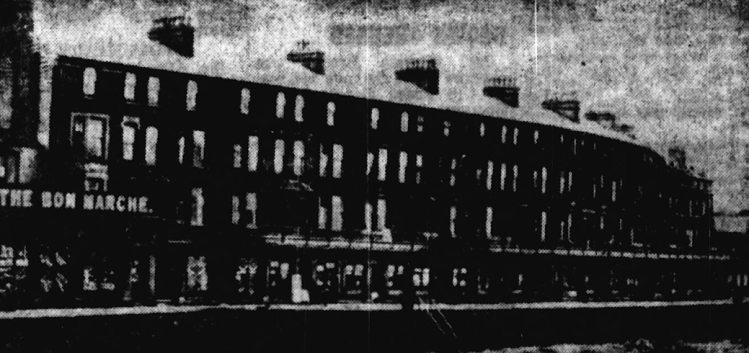
UK, 1880—a promenade at the seaside resort of New Brighton, in north-western England—alludes to the fact that cooked ham served with eggs was a popular dish at New Brighton’s eating-places
1609—to add to what is already great, also to add difficulty to difficulty—Pelion and Ossa are two mountains in Thessaly—in Greek mythology, two giants, Otus and Ephialtes, tried to pile Pelion and Ossa on Olympus in order to reach the gods and overthrow them
UK, 1912—humorous: a Jewish person—refers to the Crossing of the Red Sea, as recounted in the Book of Exodus—coined on various occasions by different persons, independently from each other
UK—‘rhubarb’ is colloquially used to denote ‘nonsense’—originated in the theatrical practice consisting for a group of actors in repeating the word ‘rhubarb’ to represent an indistinct background conversation or the noise of a crowd
Lancashire, England, 1939—used in similative and comparative phrases such as ‘as —— as soft Mick’ and ‘more —— than soft Mick’, the noun ‘soft Mick’ (also ‘Soft Mick’) indicates a great quantity or degree