a British phrase: ‘(there’s) trouble at t’mill’
1955—originated in stage plays purporting to depict life in northern England, particularly in Lancashire—‘mill’: a factory
Read More
“ad fontes!”
1955—originated in stage plays purporting to depict life in northern England, particularly in Lancashire—‘mill’: a factory
Read More
fine—USA, 1950—probably coined by comedian Jerry Lester on the late-night television variety series Broadway Open House, telecast from 29 May 1950 onwards
Read MoreUK, 1918—popular among British soldiers during WWI—satirises “the squire has been foully murdered”, a topos from late-Victorian and Edwardian melodrama
Read More
jocularly denotes a performance of Shakespeare’s Hamlet in its entirety—UK, 1946—all occurrences from articles by theatre critic J. C. Trewin (1908-1990)
Read Moremeaning: ‘for a very long time’—UK, 1944—with a pun on ‘Pilate’, originated in the British Royal Air Force during the Second World War
Read Moreexpresses distrust at air or sea travel—USA, 1926—with a pun on ‘terror’, jocularly decouples from each other the components of ‘terra firma’ (firm land)
Read More
UK, 1899—warning that touring actors wrote in the visitors’ books of low-quality lodgings—alludes to ‘Quoth the raven, “Nevermore.”’ in Edgar Poe’s ‘The Raven’
Read MoreUK, 1888—a holiday spent doing the same sort of thing as one does at work—apparently from the busmen’s habit of spending their days off riding on friends’ buses
Read More
UK, 1973—refers to a woman’s breasts as revealed e.g. by a very low-cut dress, or to (the contours of) a woman’s genitals as revealed e.g. by a very short skirt
Read More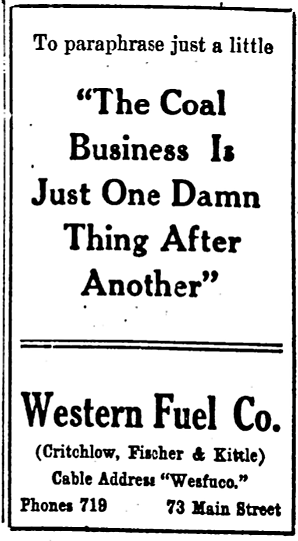
USA, 1909—first with grammatical subject ‘life’, meaning ‘life consists of a succession of unpleasant or unlucky events’—then with other grammatical subjects
Read More word histories