the Communist origin of ‘to vote with one’s feet’
UK, 1934—image said to have been first used by Lenin about the Russian soldiers who were abandoning the war during the Russian Revolution of 1917
Read More
“ad fontes!”
UK, 1934—image said to have been first used by Lenin about the Russian soldiers who were abandoning the war during the Russian Revolution of 1917
Read MoreBritish, 1925—‘to throw a spanner in(to) the works’: to cause disruption, to interfere with the smooth running of something—synonym (American English): ‘to throw a monkey wrench into’
Read MoreThe original image was of throwing a monkey wrench into the cylinder of a threshing machine, and was exclusively applied to political situations—USA, late 19th century.
Read More
1763 in French, 1798 in English—from the name of Étienne de Silhouette (1709-67), Controller-General of Finances in 1759—perhaps because he might have invented the portrait in profile obtained by tracing the outline of a head or figure by means of its shadow
Read MoreUSA, 1811—based on the three principal components that make up a flintlock gun: ‘lock’ denotes the firing mechanism, ‘stock’ the handle or wooden shoulder-piece to which it is attached, and ‘barrel’ the tube down which the bullet is fired
Read MoreU.S., 1876—‘bulldozers’: members or supporters of the Democratic Party who used threats and acts of violence in order to prevent Afro-Americans from voting for Republican candidates
Read MoreThe literal meaning of ‘rocket science’ (USA, 1930) is the science of rockets and rocket propulsion—in the 1980s, in connexion with sports, it came to be used ironically as a generic term for anything requiring a high level of intelligence or expertise.
Read More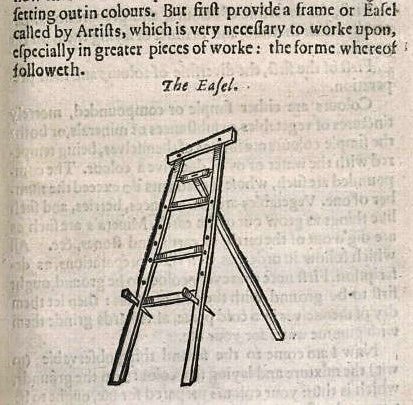
The noun ‘easel’ was borrowed from Dutch ‘ezel’; this sense of ‘ezel’ is a metaphorical extension of its literal meaning, ‘ass’, from the fact that, like a beast of burden, an easel is used to carry things. Likewise, the literal meaning of the synonymous French word ‘chevalet’ is ‘little horse’.
Read More
‘Hobby’, diminutive of ‘Hob’, pet form of ‘Robert’, was used to denote a small horse, hence a child’s toy with a horse’s head, hence a favourite occupation—cf. French ‘dada’, child’s word for horse, used to denote a favourite pastime
Read More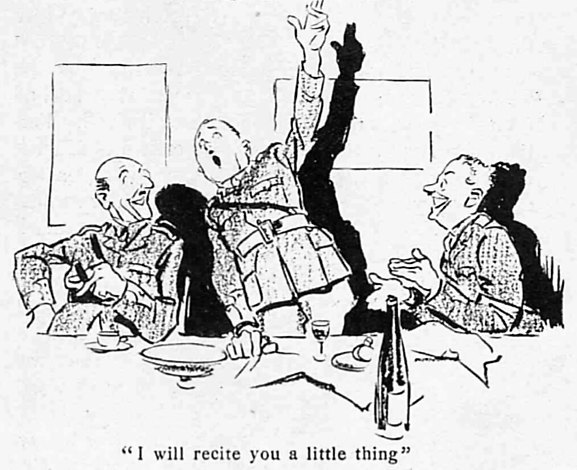
some characteristic slang creations of the British, U.S. and French soldiers during World War One, as recorded in ‘Trench Talk’, published in Everybody’s Magazine (New York) of January 1918
Read More word histories