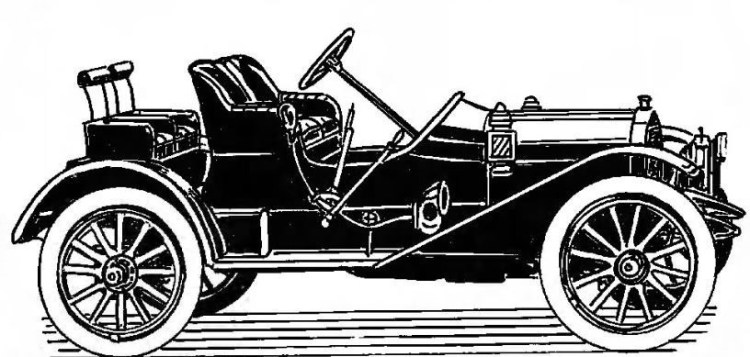
1906 (of a motor vehicle): to operate with maximum power, to function at its best—1907 (of a person or thing): to perform at peak level, to be on top form—conversely, 1910: ‘to miss/misfire on all cylinders’
American English, 1874—used in particular of stupidity, as in ‘dumb as a bag of hammers’ and variants—the underlying notion is probably that anything is dumb that does all the hard work
USA, 1977—petroleum, and any liquid derived from petroleum used in a vehicle powered by an internal-combustion engine—perhaps from popular association of ‘dinosaur’ with ‘fossil fuel’
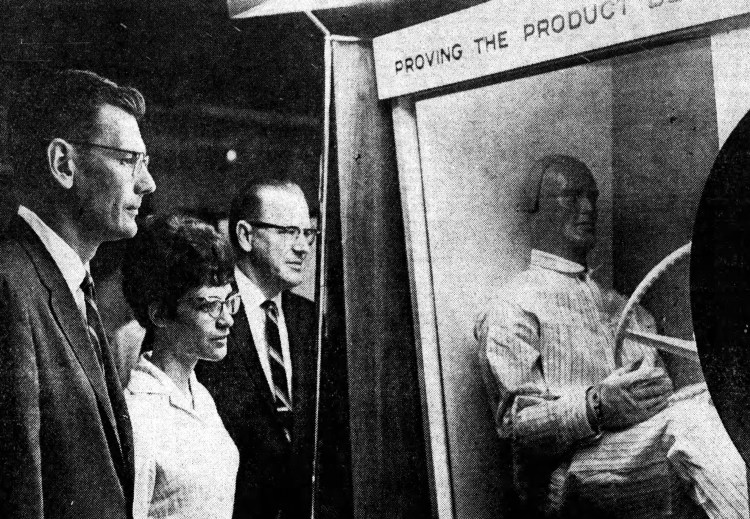
USA, 1955—a dummy used in vehicle safety tests to assess the effect of crashes, collisions, etc., on the driver and passengers of the vehicle—also, figuratively: a person or thing used as a test subject
UK, 1965—humorous—the Soviet supersonic airliner Tupolev Tu-144—from ‘Concorde’, the name of an Anglo-French supersonic airliner, and the suffix ‘-ski’, in humorous imitation of Russian
1910s—a ship designed to carry submarines—likens the submarines carried in such ships to the immature young nursed in the abdominal pouch of female kangaroos
UK & USA, early 20th century—used in a variety of meanings, among which: ‘a postcard on which the sender could leave the imprint of a kiss’, and ‘a brief statement about kissing’
a container used to store for posterity a selection of objects thought to be representative of a particular moment in time—USA, 1938—coined to specifically designate the container built by the Westinghouse Electric and Manufacturing Company for the 1939 New York World’s Fair

 word histories