The phrase at sixes and sevens means in a state of total confusion or disarray. Based on the language of dicing, the phrase was originally to set (all) on six and seven. It denoted the hazard of one’s whole fortune, or carelessness as to the consequences of one’s actions. From this earlier association with reckless behaviour came the idea that things in […]
MEANINGS – the last part of something, especially when regarded as less important or interesting – British, informal: a cigarette end ORIGIN The obsolete adjective flag, attested in the late 16th century, meant flabby, hanging down. It was either an onomatopoeic formation or, via Middle French flac, from Latin flaccus, of same […]
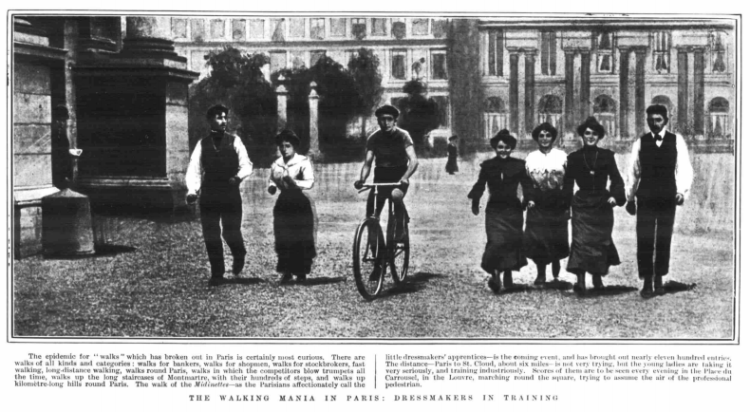
Phonetically and semantically similar to milliner, the French word midinette was defined as “a milliner’s female assistant, especially in Paris” in the 1933 Supplement to the New English Dictionary (as the Oxford English Dictionary was known). However, while milliner literally means a Milanese, a native or inhabitant of Milan, midinette is a portmanteau word, composed […]
The noun sport is a shortening of disport, which was borrowed in the early 14th century from Anglo-Norman and Old and Middle French forms such as desport, deport, disport (modern French déport). This French word was thus defined by Randle Cotgrave in A Dictionarie of the French and English Tongues (1611): Deport: masculine. Disport, sport, […]
The word tennis in its current sense is short for lawn tennis. The original form of tennis (known as real tennis to distinguish it from the later lawn tennis) was played with a solid ball on an enclosed court divided into equal but dissimilar halves, the service side (from which service was always delivered) and […]
The phrase from pillar to post means from one place to another in an unceremonious or fruitless manner. Its earliest recorded form is from post to pillar in The Assembly of Gods, an anonymous dream-vision allegory most likely written in the early fourth quarter of the 15th century (it was initially attributed to John Lydgate (1370-1449) […]
The noun ‘gongoozler’, denoting a person who stares protractedly at anything, originally designated an idler who stares at length at activity on a canal.
The phrase to sleep like a top means to sleep very soundly. In A Concise Dictionary of Phrase and Fable (1993), B. A. Phythian explains that, unlikely as it may seem, the top referred to here is the child’s toy which seems not to be moving when it is spinning, though it wobbles when being […]