‘further back than Walla Walla’: meaning and origin
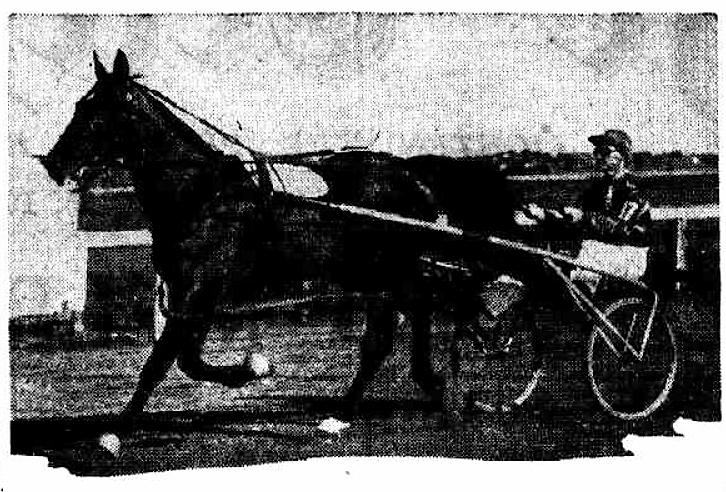
Australia, 1949—at a disadvantage or delayed—refers to Walla Walla, a champion pacer of the 1930s which conceded its rivals starts of up to 288 yards
Read More
“ad fontes!”
Australia, 1949—at a disadvantage or delayed—refers to Walla Walla, a champion pacer of the 1930s which conceded its rivals starts of up to 288 yards
Read MoreUSA, 1975—to be naive, ignorant or gullible—the image is of a country person who has just arrived in town on a turnip truck
Read More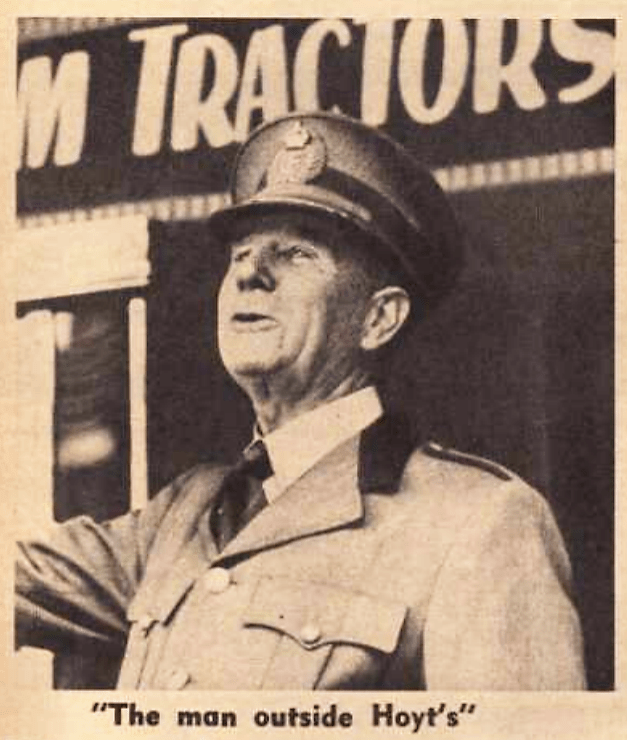
Australia, 1935—a person with extensive knowledge—originally the announcer outside Hoyt’s Theatre in Melbourne, Victoria, who wore a most elaborate uniform
Read MoreFrance, 1891; UK, 1908—a sandwich filled with ham and cheese, and toasted or grilled—from ‘croque’, conjugated form of the verb ‘croquer’, to bite, to crunch, and the noun ‘monsieur’ (the reason that this noun was chosen is unknown)
Read MoreUK, 1909: expresses the speaker’s good faith—literally, in Scouting for Boys (1908), by Robert Baden-Powell: the honour on which a Scout promises to obey the Scout Law
Read MoreUK, 1968—British and Australian: expresses indifference towards, or rejection of, a suggestion—from ‘Umpa, Umpa, Stick It Up Your Jumper’, a song recorded in 1935 by The Two Leslies (Leslie Sarony and Leslie Holmes)
Read Moreused to rebuke an unrealistic conditional—USA, 1808: ‘if my aunt had been my uncle, what would have been her gender?’—France, 1843: ‘si ma tante était un homme, ça serait mon oncle’ (‘if my aunt were a man, that would be my uncle’)
Read Morethe three traditional interests of the stereotypical New-Zealand man—but also applied to both sexes—1962 or 1963 as the title and in the lyrics of a song by the New-Zealand singer-songwriter Rod Derrett
Read More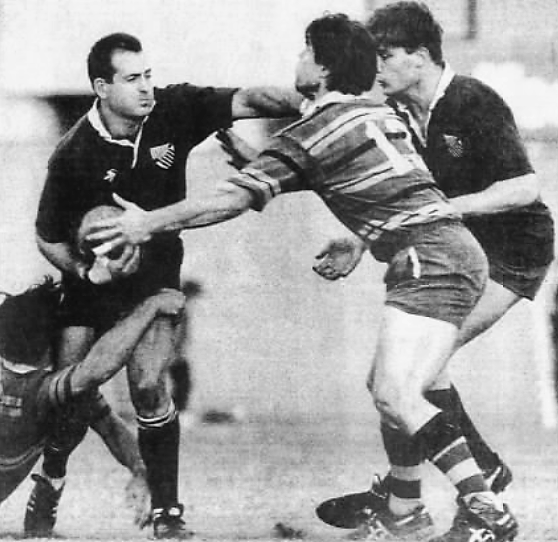
Australia, 1914—the straight-arm fend-off—from advertisements for J. C. Hutton Pty Ltd, depicting a man putting a hand in another man’s face and saying “Don’t argue—Hutton’s bacon is the best”
Read MoreUSA, 1925—With, of course, a pun on ‘pee’, meaning ‘to urinate’, the jocular phrase ‘silent like (the) ‘p’ in swimming’ is used when exposing a difficulty in pronunciation.
Read More
