is used of a place that is found inexplicably deserted; also of a person’s sudden and inexplicable disappearance—alludes to the Mary Celeste, a U.S. cargo ship which in December 1872 was found mysteriously abandoned in the North Atlantic
USA—1941 (slang of the Marines): a state of disorder or confusion—1959 (High-School slang): a prank in which the occupants of a vehicle which has temporarily come to a stop must jump out, run around the vehicle and get back in
USA, 1920—a system devised by the Red Cross Life Saving Corps for Boy Scout camps, whereby the boys were paired off, each boy in a pair staying with the other throughout a swimming period and taking responsibility for the other’s safety
Australian slang, 1988—a very small distance or amount—perhaps intended as a humorous variant of ‘bee’s knee’, used of something small, insignificant or weak
UK, 1848: a tendency to ‘talk shop’—UK, 1854: something that is characteristic of a shop displaying various kinds of goods (i.e., something that is composed of disparate commonplace elements)
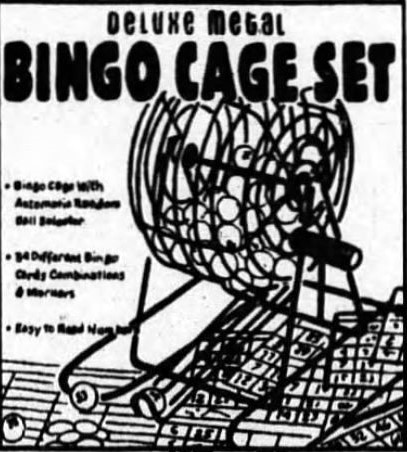
USA, 1937—a device with a revolving cage or drum, used in a game of bingo to mix up the numbered balls or slips, or for drawing numbers or prize tickets in a lottery, tombola, etc.
in the game of whist: the four of hearts, considered as an unlucky card—southeastern Scotland and northeastern England, early 19th century—origin unknown
a person who behaves as if he or she knows everything—UK, colloquial, 1860—the irony of the expression lies in the fact that clogs are mere functional pedestrian objects
‘woodpushing’: chess-playing, draughts-playing—‘woodpusher’: a chess-player, a draughts-player—refers to the wooden pieces that chess-players and draughts-players move across the board

 word histories