dismissal from employment—UK, 1882, as ‘the noble order of the boot’—‘the boot’ refers to kicking somebody out—the phrase puns on two acceptations of ‘order’: an authoritative command and an institution founded for the purpose of honouring meritorious conduct
USA, 1937—an uneasy sensation felt, especially in the stomach, as a result of nervousness or apprehension—based on the notion that the fluttering of butterflies may produce a similar sensation
UK, 1955—‘cobblers’, short for ‘cobbler’s (or cobblers’) awls’, is rhyming slang for ‘balls’, i.e., ‘testicles’, and figuratively ‘nonsense’, ‘rubbish’
African-American, 1966—different things please or satisfy different people—‘stroke’ denotes a comforting gesture of approval or congratulation, and, by extension, a flattering or friendly remark
UK, 1965—in sports such as rugby and soccer: a pass to a player likely to be tackled heavily as soon as the ball is received—the implication is that the player who receives the ball may end up in hospital, or, at least, be injured
UK, 1890—USA, 1899—the humorous phrase ‘the nineteenth hole’ denotes the bar room in a golf clubhouse, as reached at the end of a standard round of eighteen holes
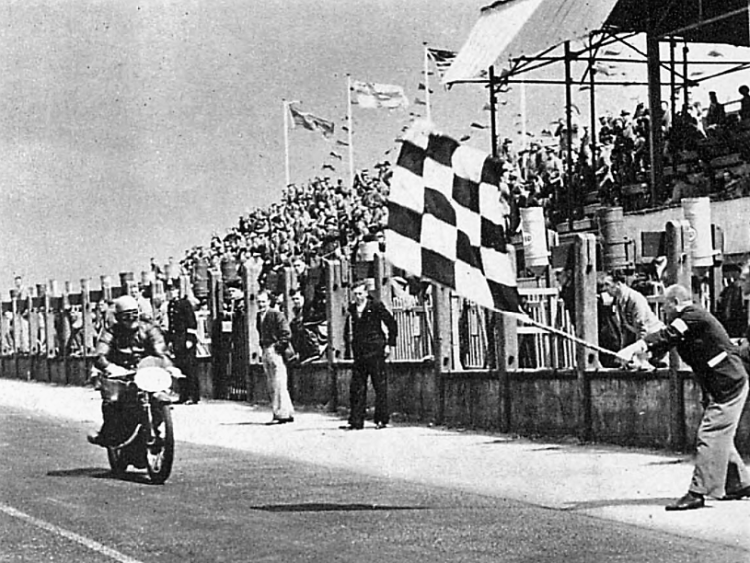
USA, 1923—in motorsports: to win a race—refers to ‘checkered flag’, denoting a flag with a black-and-white checkered pattern, displayed to drivers at the end of a race
USA, 1977—to be mentally stable—usually depreciatively in negative contexts, as ‘not to have both oars in the water’—refers to the necessity of dipping both the oars into the water to keep a rowing boat steady and steer it in a straight line
UK, 1872—the standard rules of boxing— figuratively: the standard rules of polite or acceptable behaviour—named after John Sholto Douglas, 8th Marquess of Queensberry, who supervised the preparation of the rules of boxing