‘like a Bondi tram’: meaning and origin
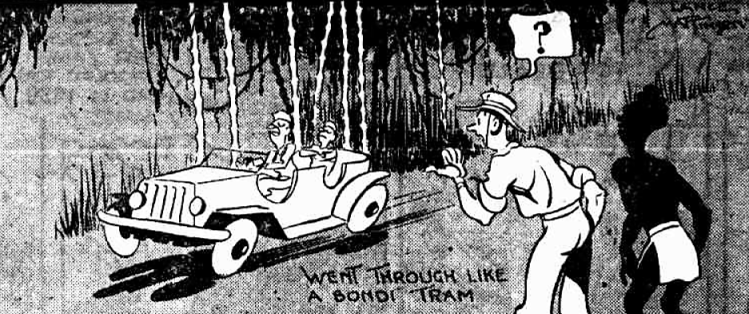
Australia, 1940—means ‘speedily’—refers to the tram service between Sydney, New South Wales, and Bondi Beach, a popular beach located 4 miles east of Sydney city centre
Read More
“ad fontes!”
Australia, 1940—means ‘speedily’—refers to the tram service between Sydney, New South Wales, and Bondi Beach, a popular beach located 4 miles east of Sydney city centre
Read MoreAustralia, 1891—used to comment on the lack of work done—of unknown origin; may have originated in butchering, i.e., the preparation and sale of meat
Read MoreUSA, 1933—usually followed by an incongruous supposition—an allegation of incompetence addressed to the driver of a motor car by another motorist, or by a cyclist or a pedestrian
Read More
derisive appellation given to Australian Rules (football), because the ball is often kicked high into the air, requiring players to leap and catch it—Australia, 1945—slang of the Australian armed forces during World War II
Read MoreUSA, 1937, as a wrestling term—an act of placing both hands on a person’s wrist or arm and then twisting it to produce a burning sensation—alludes to the fiendish methods of torture attributed to the ‘(Red) Indians’
Read More
Australia, 1952—to travel a long distance—refers to the Burke and Wills expedition of 1860-61, which aimed to cross Australia from Melbourne, in the south, to the Gulf of Carpentaria, in the north
Read More
UK, 1987—a young man who behaves in an unpleasant or aggressive manner as a result of drinking (typically lager) excessively—lager, a pale beer, is favoured by the young as opposed to the dark, traditional bitter English beer
Read Moredenotes effrontery—‘front’ denotes self-assurance, but the word that follows ‘than’ puns on ‘front’ in the sense of the façade of a building, a long seafront, etc.—also denotes a well-endowed woman, with reference to ‘front’ in the sense of a woman’s bust
Read Moredenotes effrontery—‘front’ denotes self-assurance, but the word that follows ‘than’ puns on ‘front’ in the sense of the façade of a building, the part of a garment covering a person’s front, etc.
Read MoreAustralia, 1884—designates the adjective ‘bloody’ used as an intensifier—although ‘bloody’ is used as an intensifier in other countries, its widespread use in Australia is seen as characteristic of this country
Read More word histories