‘not worth a crumpet’: meaning and early occurrences
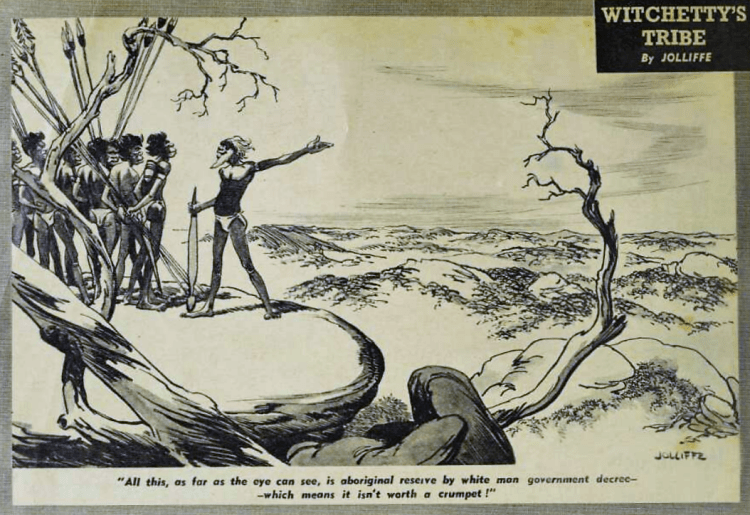
Australia, 1944—utterly worthless—one of the phrases built on the pattern ‘not worth a —’, such as ‘not worth a tinker’s curse’
Read More
“ad fontes!”
Australia, 1944—utterly worthless—one of the phrases built on the pattern ‘not worth a —’, such as ‘not worth a tinker’s curse’
Read Morefine, all right—UK, 1923 (perhaps coined by P. G. Wodehouse)—perhaps an alteration of ‘oojah capivvy’ after ‘cum’ and ‘spiffy’
Read Morealso ‘Christmas grip’—Australia, prison slang, 1953—a grabbing of another’s testicles—the image is of a handful of nuts
Read MoreAustralia, 1930—when used negatively, means ‘far away from’; when used affirmatively, means ‘not too far away from’—refers to the fact that a roaring bull can be heard over a great distance
Read MoreNew Zealand, 1885; Australia, 1897—to make a good impression on a person, to ingratiate oneself, to improve one’s position—refers to the children’s game of marbles
Read MoreUK, 1872—humorous—to obstruct a person’s view—chiefly used in ‘you make a better door than (a) window’, addressed to one who obstructs the speaker’s view
Read MoreUK, 1930—used of a man who pretends to be well-off despite having little money—the image is of a man of limited means who spends what he has on smart clothes, and therefore cannot afford any breakfast
Read MoreAustralia, 1944—jocular—denotes the Yarra River, which flows through Melbourne, Victoria—alludes to the brownish colour of this river, the image being that the mud is on the top, not at the bottom, of this river
Read MoreAustralia, 1847—an odd-job man—‘wood-and-water’ alludes to the phrase ‘hewer of wood and drawer of water’, designating a labourer of the lowest kind—‘joey’ is perhaps the noun denoting a young kangaroo, and by extension anything young or small
Read MoreUSA, 1974—a moment of sudden realisation, enlightenment or inspiration—alludes to the representation of an illuminated lightbulb above a character’s head in a cartoon or comic strip, indicating that this character has had an idea
Read More
