USA, 1981—said to have been invented by cheerleader ‘Krazy George’—popularised worldwide during the 1986 FIFA World Cup in Mexico, as a translation of Spanish ‘ola’—hence the British phrase ‘Mexican wave’ (1986)
various meanings, in particular: something with a larger capacity than its outward appearance suggests—UK, 1968—the name, in TV series Doctor Who, of a time machine outwardly resembling a police telephone box, yet inwardly much larger
(the type of) something easy, effortless or pleasant—USA, 1937—originally denoted, in golf caddies’ slang, a nine-hole round, with some reference to the literal sense of the phrase
also ‘to be all thumbs’—to be extremely clumsy (i.e., lacking in manual dexterity)—19th century—variants of the original phrase ‘each finger is a thumb’, already proverbial in the mid-16th century
to get a severe beating—popularised in UK & Ireland in the 2nd half of the 20th century through its use in chants by supporters at Association-Football matches, chiefly to threaten opposing away supporters
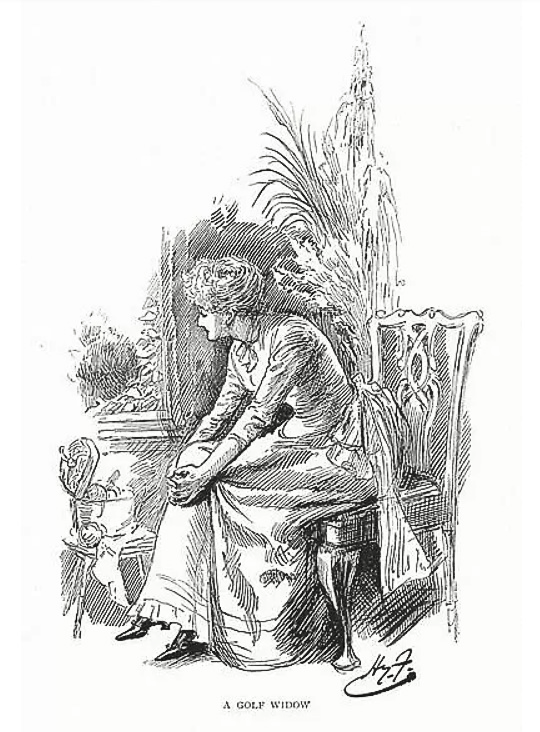
a woman whose husband spends much of his spare time playing golf—UK, 1890—refers to the fact that the husband’s repeated absences from the marital home leave his wife feeling neglected
the only option worth considering—USA, 1904—from the story (1894) of a man who is so addicted to faro that he takes part in a game despite knowing it to be rigged, because it is the only game available in town
a person who seems eager to take on difficult or unpleasant tasks—UK, 1829—originally, in pugilistic slang, a fighter who “takes a deal of punishment before he is satisfied”
originally “If the Hill will not come to Mahomet, Mahomet wil go to the hil” in Of Boldnesse (1625), an essay by the English philosopher and statesman Francis Bacon (1561-1626)


 word histories