‘to play a blinder’: meaning—and origin?
to perform outstandingly well—UK, 1902, originally in football: to play an excellent game—the image may be of a footballer whose speed and skill overpower opponents
Read More
“ad fontes!”
to perform outstandingly well—UK, 1902, originally in football: to play an excellent game—the image may be of a footballer whose speed and skill overpower opponents
Read MoreUSA, 1930—a rhetorical question calling attention to a non-sequitur or irrelevant statement or suggestion made by another person—one of the phrases built on the pattern ‘what has that got to do with the price of ——?’
Read MoreUSA, 1969—the phrases ‘off the radar’, ‘under the radar’ and ‘below the radar’ are used of something or someone that cannot be detected—the reference is to an aircraft flying too low to be detected by a radar
Read More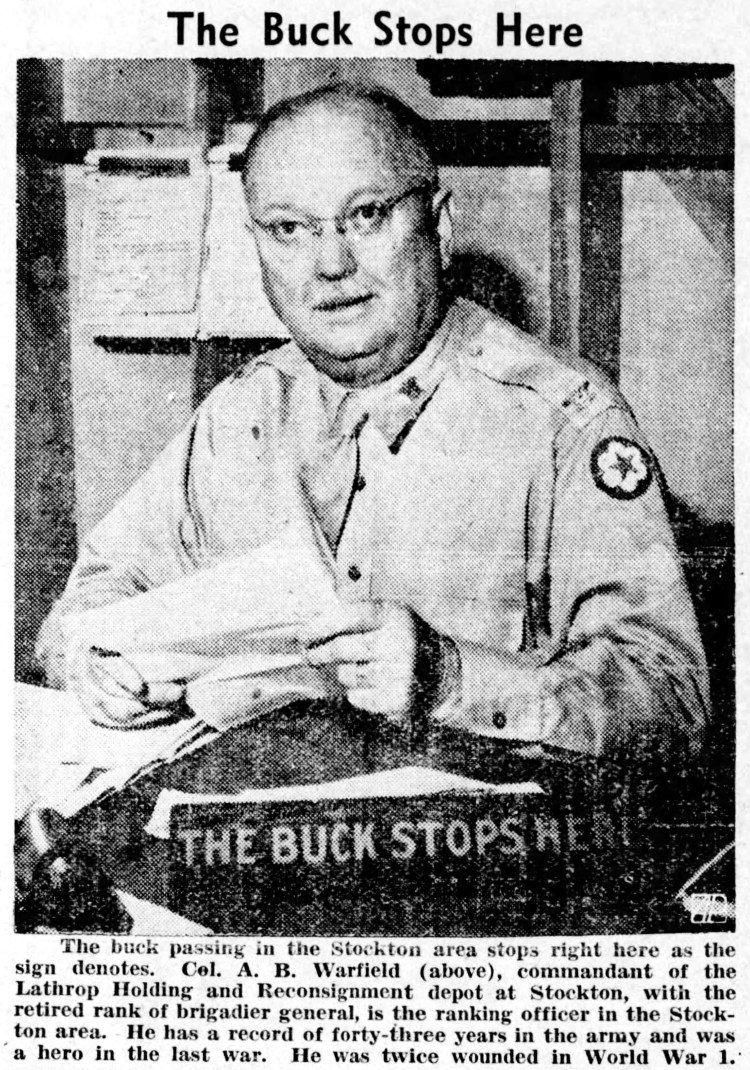
USA, 1929—the final responsibility lies with a particular person—from ‘to pass the buck’—‘buck’: in the game of poker, any object in the jackpot to remind the winner of some obligation when his or her turn comes to deal
Read MoreUSA, 1967—a person with a need to exercise tight control over their surroundings, behaviour or appearance—‘freak’ is used as the second element in compounds designating a person who is obsessed with the activity, interest or thing denoted by the first element
Read MoreAustralia, 1932: to attract unwelcome attention or criticism—originally, WWI slang: to draw artillery fire from the enemy, in reference to crab shells, used with punning allusion to artillery shells
Read MoreAustralia—in Australian Rules football: used as a call to discourage or distract a player in a rival team attempting to kick for goal—more widely: used to deride a person or organisation deemed to be performing poorly, or to wish someone bad luck—‘chewy’ = ‘chewing gum’
Read MoreAustralia, 1953—to flatter someone or to (seek to) ingratiate oneself with someone, to curry favour with someone—cf. 19th-century British phrase ‘to piss down someone’s back’ (to flatter someone)
Read Morehumorous variant of ‘one man’s meat is another man’s poison’—USA, 1938—used in particular to play on the surnames ‘Mead’ and ‘Meade’
Read MoreAustralia & New Zealand, early 1970s—‘Pommy’: a British immigrant to Australia or New Zealand; a British (especially an English) person—‘-bashing’: the activity of abusing or attacking the people mentioned just because they belong to a particular group or community
Read More word histories