MEANING to pay excessively, to be charged exorbitantly PROBABLE ORIGIN The expression to pay through the nose is first recorded in Piazza universale di proverbi Italiani, or, A common place of Italian proverbs and proverbial phrases digested in alphabetical order (1666), by Giovanni Torriano (floruit 1640): Oft-times Rich men engrossing commodities, will make one pay through the […]
One of the earliest instances of posh is from a cartoon published in Punch, or The London Charivari (London, England) of 25th September 1918. An RAF officer is talking to his mother: “Oh, yes, Mater, we had a posh time of it down there.” “Whatever do you mean by ‘posh,’ Gerald?” “Don’t you know? […]
The phrase to take French leave means: to depart unnoticed or without permission.—Synonym: to take Dutch leave. The earliest (and most curious) occurrence of to take French leave that I have found is from the anonymous novel Benedicta (1741)—the heroine is about to get married: Mrs Butler, who on this extraordinary occasion, had taken French leave […]
Aunt Sally – from The Modern Playmate: A book of games, sports, and diversions for boys of all ages (new revised edition – 1875?), by John George Wood (1827-89) The Oxford English Dictionary (first edition – 1885) thus defined Aunt Sally: a game much in vogue at fairs and races, in which […]
The word kidney, which is attested around 1325, is of unclear origin. The second element of the Middle-English form kidenei, plural kideneiren, is apparently ey, plural eyren, meaning egg (cf. German Eier, literally eggs, used to mean testicles). The first element remains uncertain; it is perhaps identical with cud. The Anglo-Saxon name for kidney was […]
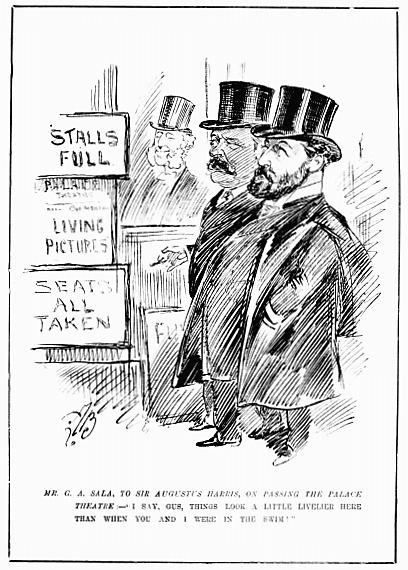
G. A. SALA, TO SIR AUGUSTUS HARRIS, ON PASSING THE PALACE THEATRE:—“I SAY, GUS, THINGS LOOK A LITTLE LIVELIER HERE THAN WHEN YOU AND I WERE IN THE SWIM!” — from The Entr’acte and Limelight (London) of 10th March 1894 (Augustus Harris (1825-73) was a British actor and theatre manager. George Augustus Sala (1828-95), was an […]
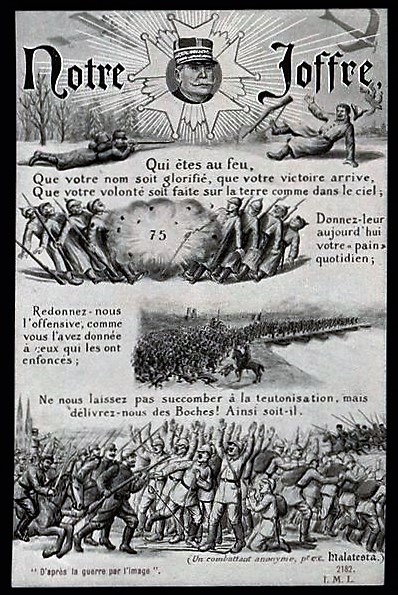
Notre Joffre (parody of the Lord’s Prayer) first published in 1914 in Le Radical de Marseille (75 refers to the French 75-mm field gun.) From 1914 to 1916, Joseph Joffre (1852-1931) was the commander in chief of the French armies on the Western Front. The following parody of the Lord’s Prayer is to be replaced […]
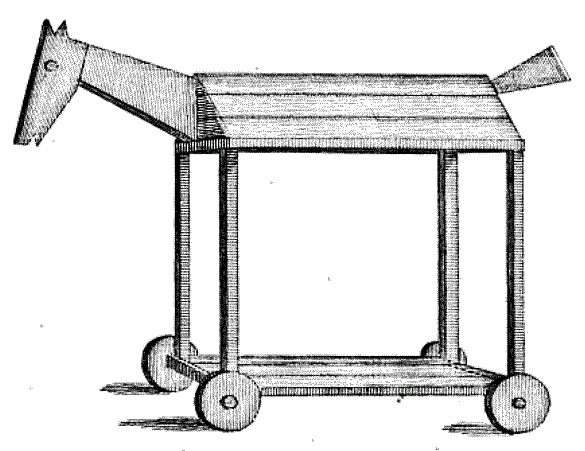
The phrase a horse that was foaled of an acorn denoted the gibbet, sometimes also called triple tree. In A Collection of English Proverbs (1678), the English naturalist and theologian John Ray (1627-1705) wrote: You’ll ride on a horse that was foal’d of an acorn. That is the gallows. Pelham; or, The Adventures […]
MEANING of payments: without delay ORIGIN This expression refers to the fingernail and might originally have alluded to drinking fair and square. A clue might be provided by the French phrase payer rubis sur l’ongle (literally to pay ruby on the fingernail), which means to pay exactly what is due. (A variant, used by prostitutes, was rubis sur pieu, […]
The phrasal verb shell out means to pay a specified amount of money, especially one regarded as excessive. It is first recorded in Moral tales for young people (1801), by the Anglo-Irish novelist and educationist Maria Edgeworth (1768-1849): “One of you, it’s plain, must shell out your corianders.” (The word coriander (or coliander), short for coriander-seed (or coliander-seed), was slang for coin, money. The form coliander-seed, […]



 word histories