Australia, 1941—used of any adverse situation—based on the rhyme between ‘crook’ (meaning ‘bad’, ‘unpleasant’, ‘unsatisfactory’) and ‘Tallarook’, the name of a town in Victoria—sometimes followed by ‘there’s no work in Bourke’
Australia, 1967—Redfern: a train station positioned one stop before Sydney Central Station—British-English regional variations include, in Newcastle upon Tyne: ‘to get out at Gateshead’
Australia, 1930—describes a person who is reluctant, or very slow, to pay for something—the image is of a snake biting the person when they put their hand in their pocket to get at their money
used to rebuke an unrealistic conditional—USA, 1808: ‘if my aunt had been my uncle, what would have been her gender?’—France, 1843: ‘si ma tante était un homme, ça serait mon oncle’ (‘if my aunt were a man, that would be my uncle’)
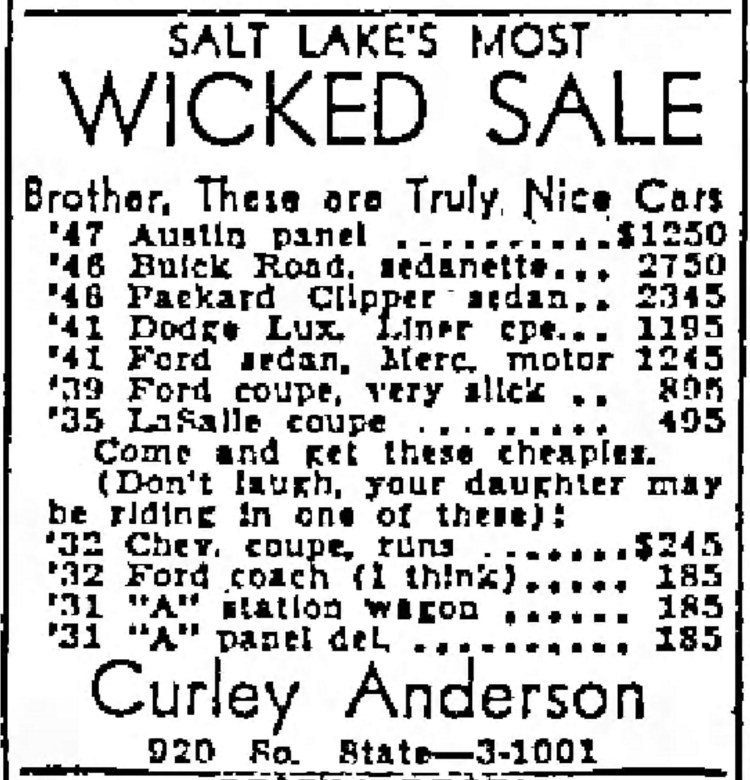
USA, 1938: painted by teenagers on the dilapidated old cars they drove—Australia, 1948: painted on cars, too, but, apparently, not specifically by teenagers—later, on bumper stickers
UK, 18th century—addressed to one who stands between the speaker and the light of a window, a lamp, a candle or a fire, or, more generally, to one who obstructs the speaker’s view
UK—originated in British-Army slang, first to designate an unintelligent person (1943), then any ordinary soldier of the lowest ranks (1945)—finally also, in civilian usage: any ordinary person (1947)
UK, 1823 as ‘calf’s head is best hot’, defined by John Badcock as “the apology for one of those who made no bones of dining with his topper on” in Slang. A Dictionary of the Turf, the Ring, the Chase, the Pit, of Bon-ton, and the Varieties of Life



 word histories