the early uses of ‘cool Britannia’ and their meanings
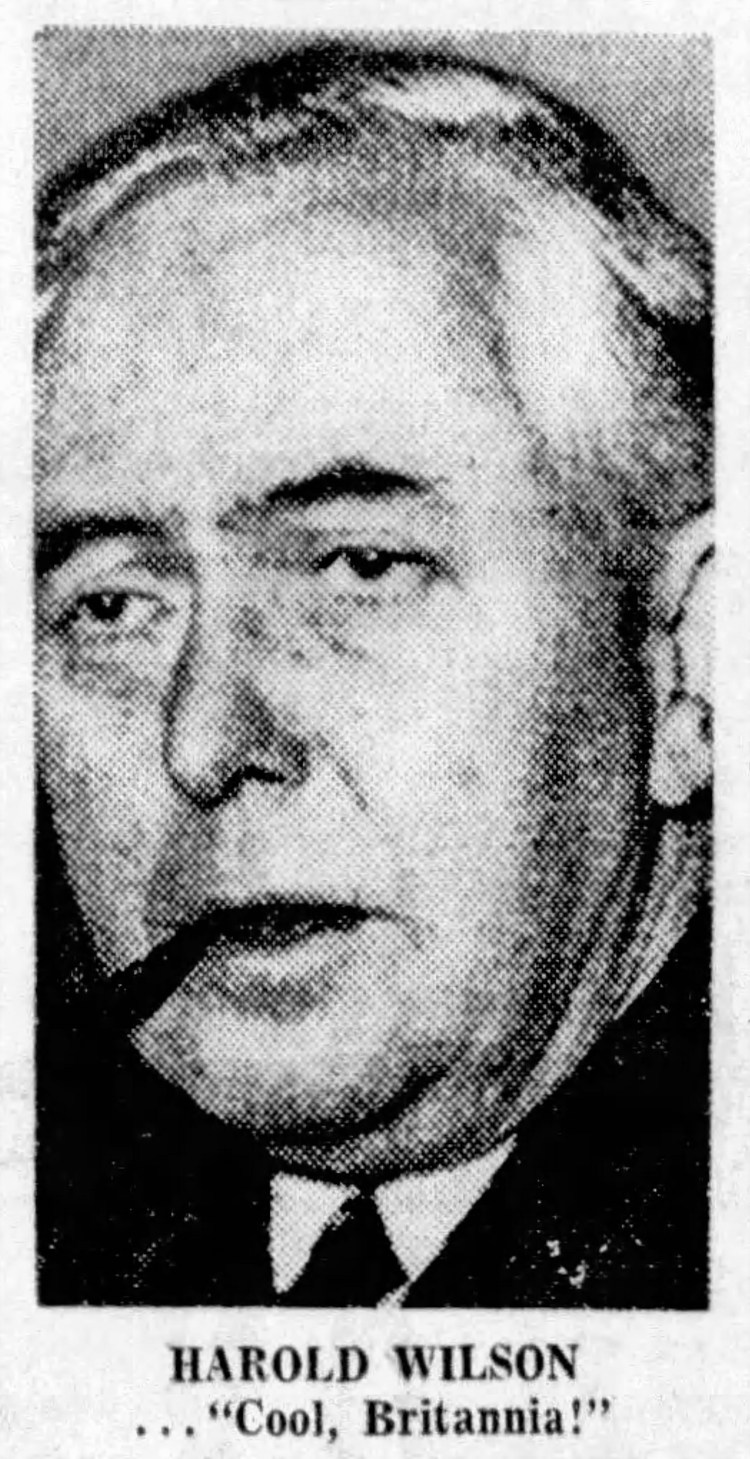
UK and Canada, from 1903 onwards—punningly alludes to ‘Rule Britannia’ (1740), the title of a popular patriotic song
Read More
“ad fontes!”
UK and Canada, from 1903 onwards—punningly alludes to ‘Rule Britannia’ (1740), the title of a popular patriotic song
Read More
a view on the manner in which catchphrases created by comedians and advertising gain currency
Read MoreUSA, 1951—used as a humorous way of recommending someone not to pursue something at which they are unlikely to be successful
Read MoreIn British slang, the noun ‘piss-up’ denotes ‘a heavy drinking bout’, and the phrase ‘couldn’t organise a piss-up in a brewery’ and variants mean ‘is’, or ‘are’, or ‘am’, ‘incapable of organising the simplest event, task, etc.’—phrase first recorded in 1980.
Read More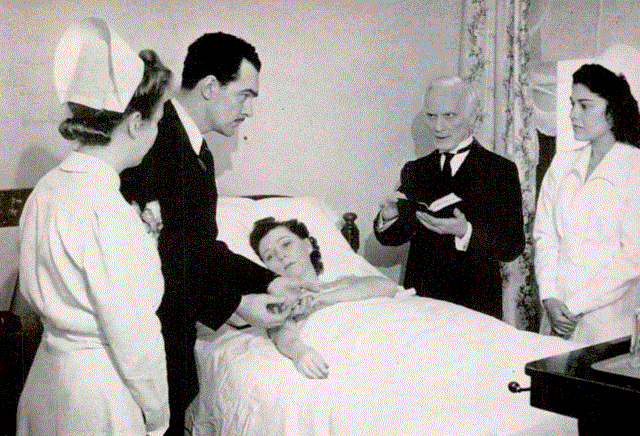
US, 1938—‘soap’: from early sponsors of such radio serials, often soap manufacturers—‘opera’: from the scale of dramatic incident that happens in these programs
Read More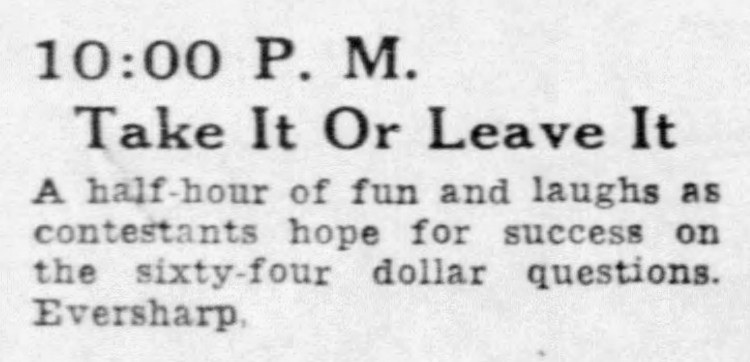
US, 1941—originated in ‘Take It or Leave It’, a radio quiz for a prize of sixty-four dollars—developed to ‘sixty-four thousand dollar question’ as early as 1943
Read Morefrom the gospel of Matthew, 18:6: If someone causes a child to sin, it would be better for them to have a millstone hung around their neck and be drowned in the sea.
Read More
‘pin-up’—US, 1941, in ‘pin-up girl’, denoting a woman being the subject of a picture that a serviceman displays on a locker-door, on a wall, etc.
Read More‘Once in a blue moon’ is a development from ‘once in a moon’, meaning ‘once a month’, hence ‘occasionally’—‘blue’ is merely a meaningless fanciful intensive.
Read More
Politicians usually work with blue smoke and mirrors. What appears to be real is mostly an illusion, and what is unlikely turns out to be real. But sometimes, the blue smoke and mirrors don’t work. When you can’t produce a budget, you can’t call a news conference and pretend you did. from The News […]
Read More word histories