‘stalkerazzo’: meaning and origin
USA, 1995—a freelance videographer or photographer, characterised as being extremely aggressive in pursuing celebrities to video or photograph them—a blend of the nouns ‘stalker’ and ‘paparazzo’
Read More
“ad fontes!”
USA, 1995—a freelance videographer or photographer, characterised as being extremely aggressive in pursuing celebrities to video or photograph them—a blend of the nouns ‘stalker’ and ‘paparazzo’
Read Morethe celebrities of the fashionable literary and show-business world—USA, 1944—blend of ‘glitter’ ((to make) a brilliant appearance or display) and of ‘literati’ (intellectuals)
Read More
USA, 1995—a woman thought to have become intolerably obsessive or overbearing in planning the details of her wedding—from ‘Godzilla, the suffix ‘-zilla’ is used to form humorous nouns which depict a person or thing as a particularly fearsome, relentless or overbearing example of its kind
Read More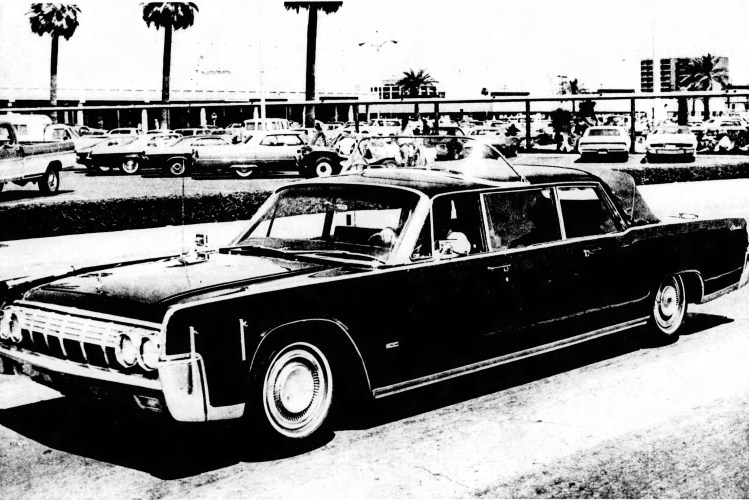
USA, 1969—the 1964 Lincoln Continental specially built and equipped for Pope Paul VI’s 1965 visit to the United States
Read Morethe practice of reducing a product’s amount or volume per unit while continuing to offer it at the same price—blend of ‘shrink’ and ‘inflation’—2014—apparently coined by Pippa Malmgren
Read Morea woman’s topless swimsuit, consisting of the lower half of a bikini—from the prefix ‘mono-’ and ‘-kini’ in ‘bikini’, reinterpreted as containing the prefix ‘bi-’—coined in 1946 by French clothing designer Louis Réard
Read Morea film which fails to achieve the commercial success that was expected—UK, 1986—from ‘flop’ (a failure) and ‘-buster’ in ‘blockbuster’ (a film which achieves great commercial success)
Read Morea person who shows no proficiency in the use of information technology—USA, 1998—from ‘techno-’ in ‘technological’ and ‘technology’, and ‘-saur’ in ‘dinosaur’, i.e., a person who is unable to adapt to change
Read Morethe Jerusalem artichoke—UK, 1968—blend of ‘fart’ and ‘artichoke’ in ‘Jerusalem artichoke’—refers to the flatulence caused by eating Jerusalem artichokes
Read MoreUK, 1954—the economic policy of Rab Butler, Conservative Chancellor of the Exchequer (1951-5), regarded as largely indistinguishable from that of Hugh Gaitskell, Labour Chancellor of the Exchequer (1950-1)—blend of ‘Butler’ and ‘Gaitskell’ plus suffix ‘-ism’
Read More word histories