‘conspicuous by one’s/its absence’: meaning and origin
UK, 1847—obviously not present where one/it should be—popularised in 1859 by the British statesman John Russell—alludes to the Annals, Book III, 76, by the Roman historian Tacitus
Read More
“ad fontes!”
UK, 1847—obviously not present where one/it should be—popularised in 1859 by the British statesman John Russell—alludes to the Annals, Book III, 76, by the Roman historian Tacitus
Read MoreUSA, 1855—used of a situation in which it is difficult to distinguish cause and effect—refers to the traditional problem of which came first, the chicken (to lay the egg) or the egg (to produce the chicken)
Read More
USA, 1923—in motorsports: to win a race—refers to ‘checkered flag’, denoting a flag with a black-and-white checkered pattern, displayed to drivers at the end of a race
Read More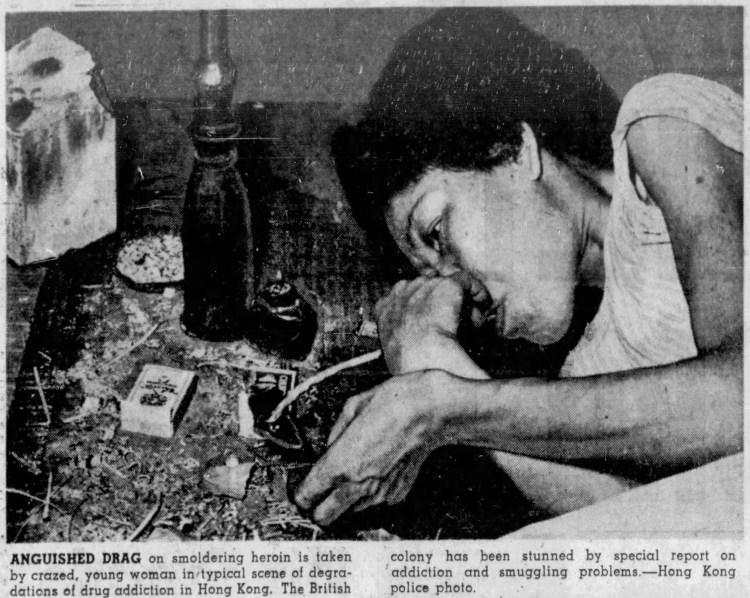
to take heroin by heating it and inhaling the fumes, which form a pattern resembling the tail of a dragon—originated in Hong Kong in the 1950s as a translation of Cantonese slang ‘chui lung’, ‘dragon chasing’
Read MoreUSA, 1977—to be mentally stable—usually depreciatively in negative contexts, as ‘not to have both oars in the water’—refers to the necessity of dipping both the oars into the water to keep a rowing boat steady and steer it in a straight line
Read MoreUSA—1940: a policy of non-acceptance with regard to a specified situation, activity, result, substance, etc.—1971: a policy of non-acceptance with regard to abusive, anti-social or criminal behaviour, especially the use of illegal drugs
Read More
UK, 1872—the standard rules of boxing— figuratively: the standard rules of polite or acceptable behaviour—named after John Sholto Douglas, 8th Marquess of Queensberry, who supervised the preparation of the rules of boxing
Read More
a sample text beginning with ‘lorem ipsum’, based on jumbled elements from Cicero’s De Finibus Bonorum et Malorum—‘lorem ipsum’: arbitrary clipping of the first syllable of ‘dolorem ipsum’ in Cicero’s text
Read More
UK, 1822—of a member of parliament: to join the party opposed to one’s present party—also to vote against one’s own party; to change sides on an issue—from the practice whereby a member of parliament literally crosses the floor to join another party
Read MoreUK, 1836—a person, country, etc., that appears powerful or threatening but is actually weak or ineffective—from Chinese ‘zhǐlǎohǔ’ (‘zhǐ’, paper, ‘lǎohǔ’, tiger)—used in the post-war years by the Chinese Communist Party of the USA and other reactionaries
Read More
