‘parlour patriot’ (1797)—the earliest of the phrases in which ‘parlour’ is a depreciative attributive modifier used of a person claiming to be committed to a cause but not actually involved in the achievement of that cause—‘parlour’ is also used of the claimed commitment to a cause without actual involvement in the achievement of that cause
The noun ‘armchair’ is used as an attributive modifier meaning: 1) based or taking place in the home as opposed to the world or environment outside; hence, chiefly depreciatively: 2) lacking or not involving practical or direct experience of a particular subject or activity.
USA, 1990—a method of caring for a premature newborn in which a parent holds the infant on their chest in skin-to-skin contact—from the fact that kangaroos give birth to still-developing foetuses, then nurse them in their pouches
On the pattern of phrases such as ‘nom de guerre’, ‘nom de théâtre’ and ‘nom de plume’, ‘nom de —’ is used, often humorously, to form phrases denoting a pseudonym, an alternative name.
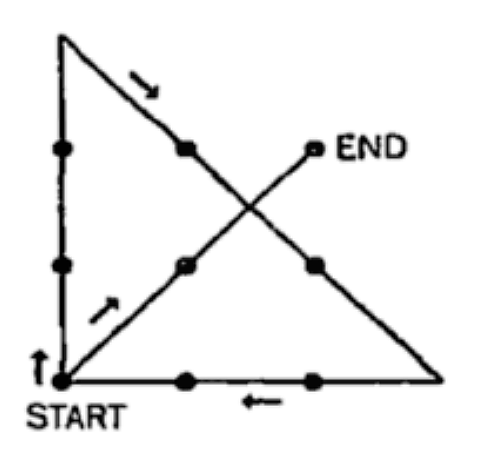
USA, 1971—to think creatively or in an unconventional manner—originated in a puzzle in which the aim is to connect nine dots arranged in the form of a square with four consecutive straight lines: the puzzle can be solved only by extending three of the lines outside the box implied by the arrangement of the dots
1687—used in negative and interrogative constructions, ‘bread and butter’ denotes a matter which one has the right to express an opinion on, involve oneself in, etc.
UK—literally, 1919: a dish consisting of meat served with two varieties of vegetable, seen as typical of traditional or unimaginative British cooking—figuratively, 1951: something simple and unsophisticated, or something indicative of simple and unsophisticated tastes
‘cross I win (and) pile you lose’ (1673)—‘heads I win (and) tails you lose’ (1728)—meaning: ‘I win whatever happens’—with reference to the practice of tossing a coin to determine a winner or to make a decision
UK, 1711—means that anyone can be right occasionally, if only by chance—often used specifically to suggest that one holding a fixed belief regardless of changing circumstances will occasionally, if rarely, be correct

 word histories