origin of ‘castles in Spain’ and ‘castles in the air’
In French medieval chansons de geste ‘castles in Spain’ denoted fiefs that had to be conquered from the Saracens by the knights to whom they had been granted.
Read More
“ad fontes!”
In French medieval chansons de geste ‘castles in Spain’ denoted fiefs that had to be conquered from the Saracens by the knights to whom they had been granted.
Read Moreearly 20th century—refers to the method of tempting a donkey to move forward by dangling a carrot before it, and beating it with a stick if it refuses
Read Moreto go off—19th cent.—from a procedure consisting in making a person walk on a straight line drawn with chalk in order to establish whether they are inebriated
Read More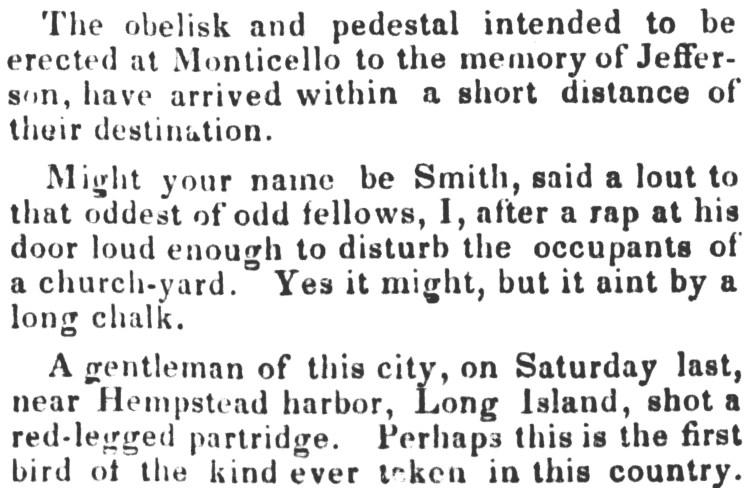
‘by a long chalk’: in a great degree, by far — 19th century, from the practice of using chalk to mark up the points scored in a game
Read Morefrom ‘a bolt out of the blue’, denoting a sudden and unexpected event, with reference to the unlikelihood of a thunderbolt coming from a clear blue sky
Read Morefrom the image of an impossible task, ‘to set the Thames on fire’: to work wonders — typically used negatively in the ironic sense never to distinguish oneself
Read Morefrom the name of an 1847 farce in which a landlady lets out, unbeknown to them, the same room to two tenants, Box and Cox, the one by day, the other by night
Read More‘Let the cobbler stick to his last’ goes back to Pliny’s story of the Greek artist Apelles answering a cobbler who had criticised one of his paintings.
Read More
Named after Latin ‘canina litera’ (‘the canine letter’), ‘the dog’s letter’ is a name for the letter R, from its resemblance in sound to the snarl of a dog.
Read More‘maudlin’: tearfully sentimental – from the Middle-English name ‘Maudelen’, designating Mary Magdalene, a follower of Jesus, customarily represented as weeping
Read More
