In British slang, the noun ‘piss-up’ denotes ‘a heavy drinking bout’, and the phrase ‘couldn’t organise a piss-up in a brewery’ and variants mean ‘is’, or ‘are’, or ‘am’, ‘incapable of organising the simplest event, task, etc.’—phrase first recorded in 1980.
Many centuries before becoming a nickname for New York City and the name of a fictional city associated with the Batman stories, Gotham was used in Britain as the name of a (probably fictional) village proverbial for the folly of its inhabitants.
The phrase to chop and change means to change one’s opinions or behaviour repeatedly and abruptly. Here, chop originally meant to barter, and change meant to make an exchange with; in other words, this was an alliterative repetitive expression, the two verbs having roughly the same meaning (cf. also, for example, the alliterative phrase to be part and […]
The phrase ‘to go to pot’ means ‘to be ruined or destroyed’, ‘to go to pieces’, ‘to deteriorate through neglect’. The allusion is to the cutting up of meat into pieces ready for the cooking-pot, as several 16th-century texts make clear.
The 1776 French translation of Laurence Sterne’s ‘The Life and Opinions of Tristram Shandy’ gave to French ‘dada’, a child’s noun for ‘horse’, the figurative meaning of ‘favourite pastime’ or ‘pet idea’.
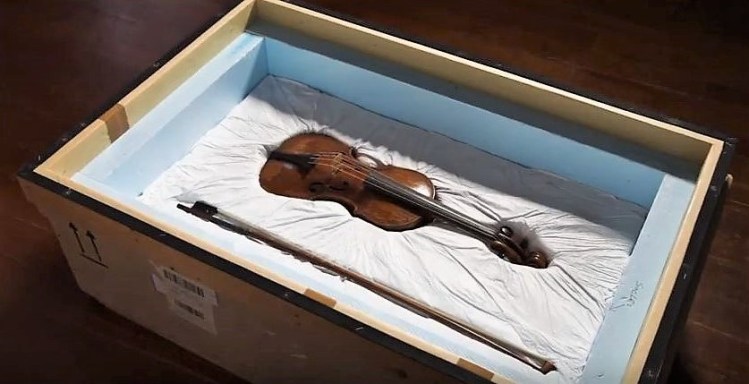
First recorded in The Bystander (London) on 24 January 1906, this French phrase means ‘hobby, pastime’; it refers to the passion that the French painter Jean Auguste Dominique Ingres (1780-1867) had for playing the violin.
from army use on the Western Front during World War One: ‘cootie’, ‘body louse’, ‘cooty’, ‘infested with lice’, ‘coot’, ‘louse’, probably ultimately refer to the aquatic bird called ‘coot’, reputed to be lice-infested
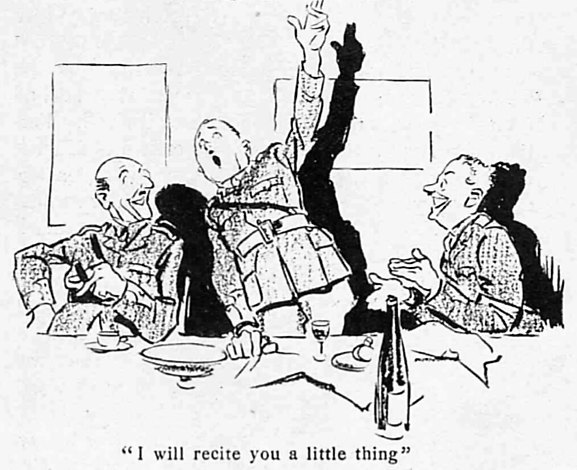
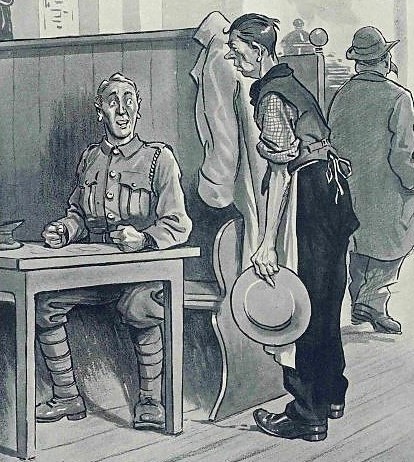
some characteristic slang creations of the British, U.S. and French soldiers during World War One, as recorded in ‘Trench Talk’, published in Everybody’s Magazine (New York) of January 1918
early 20th century—‘Zeppelins in a cloud’ and variants mean ‘sausage and mash’—during World War One, the phrase was used as a manner of disregarding the fear caused by the bombing raids carried out by Zeppelin airships
An expression of indifference to, or resigned acceptance of, a state of affairs, ‘san fairy ann’ jocularly represents the French phrase ‘ça ne fait rien’, meaning ‘that doesn’t matter’. It originated in army use on the Western Front during the First World War.