origin of ‘bee’ (social gathering for a specific purpose)
USA, late 18th century—perhaps a folk-etymological alteration of British dialectal variants of ‘boon’, meaning ‘help given by neighbours’
Read More
“ad fontes!”
USA, late 18th century—perhaps a folk-etymological alteration of British dialectal variants of ‘boon’, meaning ‘help given by neighbours’
Read Morefrom Old French and Anglo-Norman ‘aveir de peis’, ‘goods of weight’, as distinguished from the goods sold by measure or number
Read More
‘coward’—from Old-French ‘cuard’, probably referring to a frightened animal with its tail between its legs—from ‘cüe’ (Modern French ‘queue’), ‘tail’, and pejorative suffix ‘-ard’ (cf. ‘bastard’)—‘cowardy, cowardy custard’, alliterative nonsensical children’s phrase (19th century)
Read MoreFirst recorded in The Leeds Mercury (Leeds, Yorkshire) of Friday 26 August 1938, the phrase ‘to use one’s loaf’ means ‘to use one’s common sense’. Here, ‘loaf’, a shortening of ‘loaf of bread’, is rhyming slang for ‘head’.
Read More
‘handbag’: to bully or coerce by subjecting to a forthright verbal assault or criticism—originally used with reference to British Prime Minister Margaret Thatcher in The Economist (7 August 1982)—from literal meaning ‘to batter or assault with a handbag’
Read Moreto create trouble or a commotion—USA, 1840—a euphemism for synonymous phrases such as ‘to raise the Devil’ and ‘to raise hell’—from the name of the eldest son of Adam and Eve and murderer of his brother Abel
Read Morefrom the name of Mrs Malaprop, a character who confuses long words in The Rivals (1775), a comedy by the Irish playwright Richard Brinsley Sheridan—character named after ‘malapropos’, from the French locution ‘mal à propos’, literally ‘ill to purpose’
Read More‘eggcorn’: alteration of a word or phrase through the mishearing or reinterpretation of one or more of its elements as a similar-sounding word—coined in 2003 on the website Language Log with reference to a misinterpretation of ‘acorn’ as ‘eggcorn’
Read Morefrom the 16th-century phrase ‘to set cock a hoop’, ‘to set (the) cock on (the) hoop’, apparently meaning ‘to put the cock (= spigot) on a barrel hoop and let the liquor flow prior to a drinking bout’—‘cock’ later equated with the fowl and ‘hoop’ with French ‘huppe’ (tufted crest)
Read More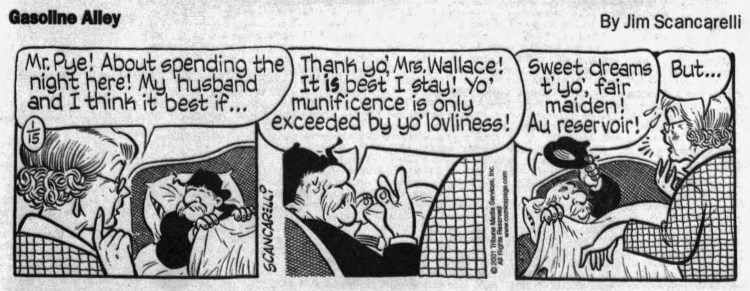
A humorous alteration of ‘au revoir’ after the noun ‘reservoir’, the exclamation ‘au reservoir’ is first recorded in Little Pedlington and the Pedlingtonians (London, 1839), by the English author John Poole (1786-1872).
Read More word histories