the anti-nuclear phrase ‘one flash and you’re ash’
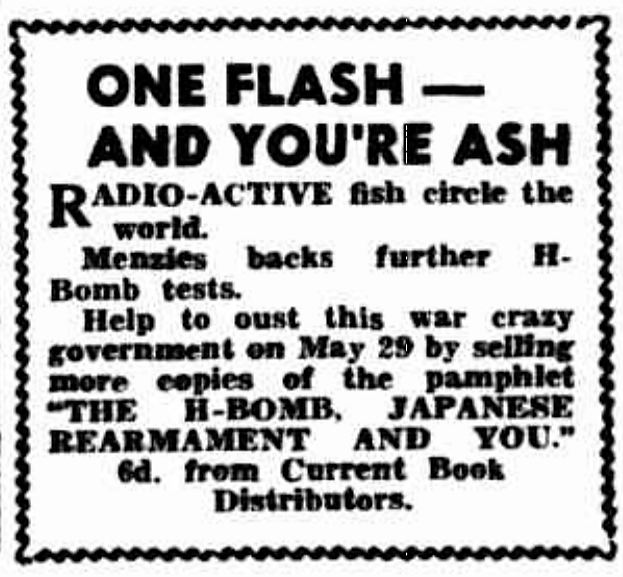
Australia, 1953—slogan used by opponents of nuclear weapons—also used in New Zealand
Read More
“ad fontes!”
Australia, 1953—slogan used by opponents of nuclear weapons—also used in New Zealand
Read Moremeaning: ‘for a very long time’—UK, 1944—with a pun on ‘Pilate’, originated in the British Royal Air Force during the Second World War
Read Moreexpresses distrust at air or sea travel—USA, 1926—with a pun on ‘terror’, jocularly decouples from each other the components of ‘terra firma’ (firm land)
Read Moreto have no idea at all—Scotland, 1990—‘scooby’ (short for ‘Scooby Doo’, name of cartoon dog in U.S. television series and films): rhyming slang for ‘clue’
Read More
1928—dessert consisting of toasted marshmallows and chocolate between graham crackers—represents a rapid pronunciation of synonymous ‘some more’ (1925)
Read MoreUK and USA, World War One—borrowing from French, literally ‘it is war’—expresses acceptance of, or resignation at, the situation engendered by war
Read More
Decided by the Académie française, the erroneous spelling ‘oignon’ (= ‘onion’) has become a symbol of prejudiced people, ignorant of the history of their own language.
Read More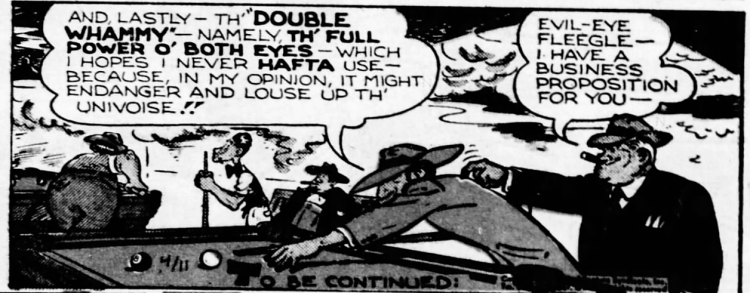
USA—‘whammy’ (baseball, 1927): evil influence or hex—‘double whammy’ (boxing, 1938): evil spell more potent than a whammy
Read More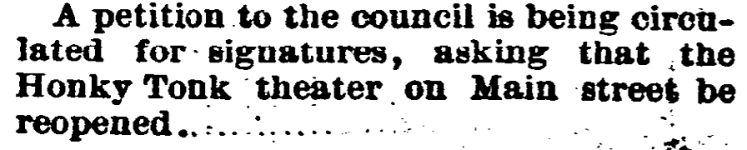
USA—probably a reduplication based on ‘honk’—appeared in Texas as the name of a theatre (1889) and of a variety show (1890)
Read MoreUK, 1957—an expression of encouragement, but often used ironically with the opposite meaning—origin unclear
Read More
