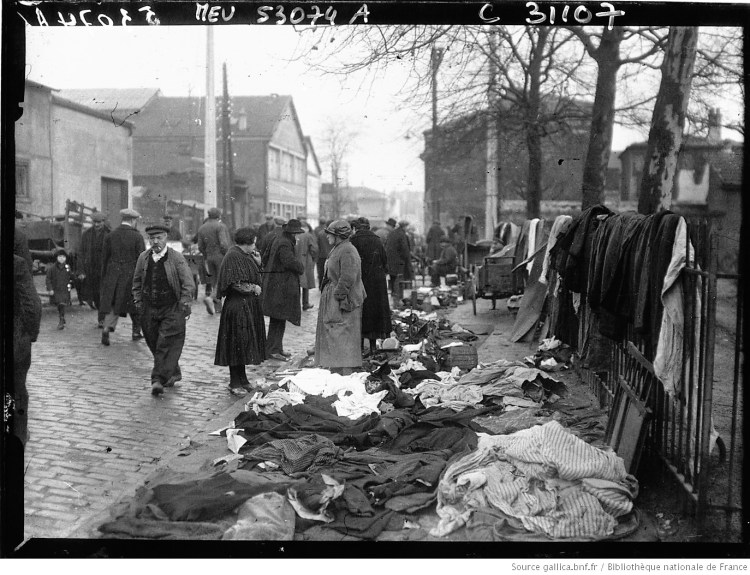
Marché aux puces à Montreuil – Agence Meurisse – 1928 source: gallica.bnf.fr / Bibliothèque Nationale de France The term flea market is a calque of French marché aux puces. Both names denote a street market selling second-hand goods. In In Europe (Pusey Press, New York, 1922), the American author George Samuel Dougherty […]
the gods at the Comedy Theatre, London, 1949 source: Historic England – The Theatres Trust Via Middle French galerie, the noun gallery, attested in the late 15th century, is from the medieval Latin of Italy galeria, an alteration of medieval Latin galilaea, designating a porch at the entrance of a monastery’s church—hence English […]
The French phrase cherchez la femme, search for the woman, is used to indicate that the key to a problem or mystery is a woman, and that she need only be found for the matter to be solved. It first appeared as a catchphrase used by M. Jackal, a police detective, in Les Mohicans de Paris, […]
The French term foie gras, from foie, liver, and gras, fat, fatty, denotes the liver of a specially fattened goose or duck prepared as food. Short for pâté de foie gras, it also denotes a smooth rich paste made from fatted goose or duck liver. Its first known use in English is in The Fudge […]
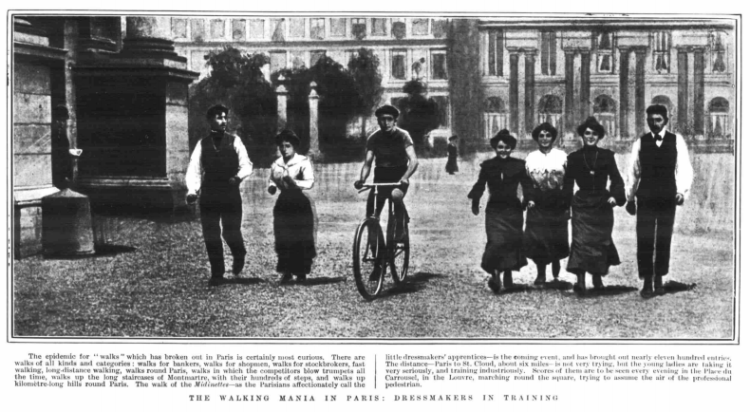
Phonetically and semantically similar to milliner, the French word midinette was defined as “a milliner’s female assistant, especially in Paris” in the 1933 Supplement to the New English Dictionary (as the Oxford English Dictionary was known). However, while milliner literally means a Milanese, a native or inhabitant of Milan, midinette is a portmanteau word, composed […]
MEANING a young man paid or financially supported by a woman, typically an older woman, to be her escort or lover ORIGIN In English, gigolo originally denoted a professional male dancing-partner. One of its first users was the American novelist, short story writer and playwright Edna Ferber (1885-1968) in Gigolo, which was published in […]


 word histories