‘Glamour’ was originally a Scottish alteration of ‘grammar’: this article explains how it came to denote an attractive or exciting quality that makes certain people or things seem appealing. Classical Greek γραμματική (= grammatikḗ) and classical Latin grammătĭca denoted the methodical study of literature, that is to say, philology in the widest modern sense, including textual […]
some characteristic slang creations of the British, U.S. and French soldiers during World War One, as recorded in ‘Trench Talk’, published in Everybody’s Magazine (New York) of January 1918
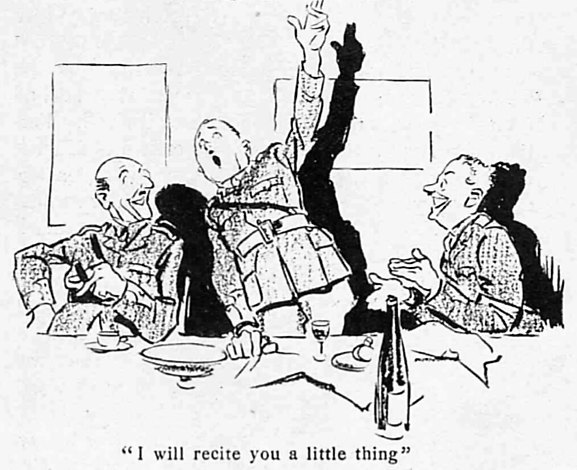
An expression of indifference to, or resigned acceptance of, a state of affairs, ‘san fairy ann’ jocularly represents the French phrase ‘ça ne fait rien’, meaning ‘that doesn’t matter’. It originated in army use on the Western Front during the First World War.
Etymologically, a jewel is a little game, a little plaything: ‘jewel’ is from a French diminutive of ‘jeu’, meaning ‘a game’, ‘a play’. The word ‘bijou’ is from Breton ‘bizou’, meaning ‘a finger-ring’, from ‘biz’, ‘finger’.
The phrase ‘below the salt’ originated in the social differentiations materialised by the former custom of placing a large saltcellar in the middle of a dining table.
French—from the noun use of the Latin adjective ‘natalis’ (from Christian-Latin ‘natalis dies’, ‘day of birth’), denoting the festival of the nativity of Christ
from Spanish ‘vamos’, ‘let us go’—first recorded as ‘vamos’ in ‘Every Night Book; or, Life after Dark’ (London, 1827), by the English author William Clarke

 word histories