meaning and origin of the phrase ‘alarums and excursions’
confused activity and uproar—alludes to the frequent collocation of ‘alarum’ and ‘excursion’ in stage directions in Shakespearean drama
Read More
“ad fontes!”
confused activity and uproar—alludes to the frequent collocation of ‘alarum’ and ‘excursion’ in stage directions in Shakespearean drama
Read More1825, Anglo-Irish alteration of ‘by Jesus’—1867 as one word—‘the bejesus out of’ (1931) intensifies the action conveyed by the preceding verb
Read MoreWhy is the element one in words such as alone and only not pronounced like the numeral one? Both the indefinite article an (a before consonant) and the numeral one are from Old English ān—which has survived in Scotland as ane, used both as indefinite article and as numeral. This Old-English word ān meant a/an, one, […]
Read More
Scotland, 1914: ‘buroo’, informal form of ‘bureau’ (generic sense)—later used specifically in the sense of Labour Bureau, hence of unemployment benefit (1921)
Read Moreoriginated in the mistranslation by Erasmus of Greek ‘skáphē’ (meaning anything hollowed out) as a word denoting a digging tool
Read Moredenotes extreme quickness of movement—the use of ‘greased’ likens lightning to a machine that a mechanic has lubricated in order to minimise the friction and make it run easily
Read Morefrom Old French and Anglo-Norman ‘aveir de peis’, ‘goods of weight’, as distinguished from the goods sold by measure or number
Read More‘eggcorn’: alteration of a word or phrase through the mishearing or reinterpretation of one or more of its elements as a similar-sounding word—coined in 2003 on the website Language Log with reference to a misinterpretation of ‘acorn’ as ‘eggcorn’
Read Morefrom the 16th-century phrase ‘to set cock a hoop’, ‘to set (the) cock on (the) hoop’, apparently meaning ‘to put the cock (= spigot) on a barrel hoop and let the liquor flow prior to a drinking bout’—‘cock’ later equated with the fowl and ‘hoop’ with French ‘huppe’ (tufted crest)
Read More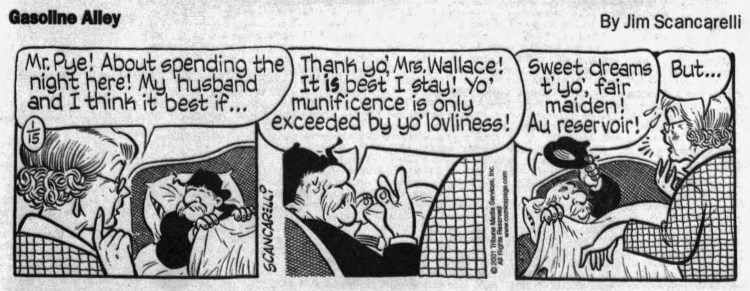
A humorous alteration of ‘au revoir’ after the noun ‘reservoir’, the exclamation ‘au reservoir’ is first recorded in Little Pedlington and the Pedlingtonians (London, 1839), by the English author John Poole (1786-1872).
Read More word histories