‘silent like the ‘p’ in swimming’: meaning and early occurrences
USA, 1925—With, of course, a pun on ‘pee’, meaning ‘to urinate’, the jocular phrase ‘silent like (the) ‘p’ in swimming’ is used when exposing a difficulty in pronunciation.
Read More
“ad fontes!”
USA, 1925—With, of course, a pun on ‘pee’, meaning ‘to urinate’, the jocular phrase ‘silent like (the) ‘p’ in swimming’ is used when exposing a difficulty in pronunciation.
Read MoreUK, 1904—punning extension (in which ‘time’ is a verb, and ‘flies’ a noun) of the cliché ‘time flies’
Read More
broken English—UK, 1883—from ‘English As She is Spoke: or A Jest in Sober Earnest’ (London: Field & Tuer, 1883), title given to a book intended as a Portuguese-English conversational guide
Read More
a comma immediately preceding the conjunction in a list of items—1978—named after the preferred use of such a comma in the house style of Oxford University Press
Read More
1928—dessert consisting of toasted marshmallows and chocolate between graham crackers—represents a rapid pronunciation of synonymous ‘some more’ (1925)
Read MoreUK and USA, World War One—borrowing from French, literally ‘it is war’—expresses acceptance of, or resignation at, the situation engendered by war
Read More
The letter ‘s’ in both the nouns currently spelt ‘island’ and ‘aisle’ is due to folk-etymological association of those words with the unrelated noun ‘isle’.
Read More
Decided by the Académie française, the erroneous spelling ‘oignon’ (= ‘onion’) has become a symbol of prejudiced people, ignorant of the history of their own language.
Read More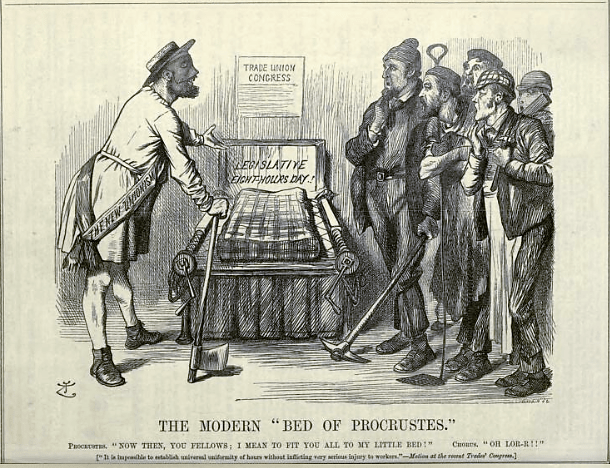
a means of enforcing conformity—Greek mythology: Procrustes was a robber who made his victims fit a bed by either stretching them longer or cutting them shorter
Read More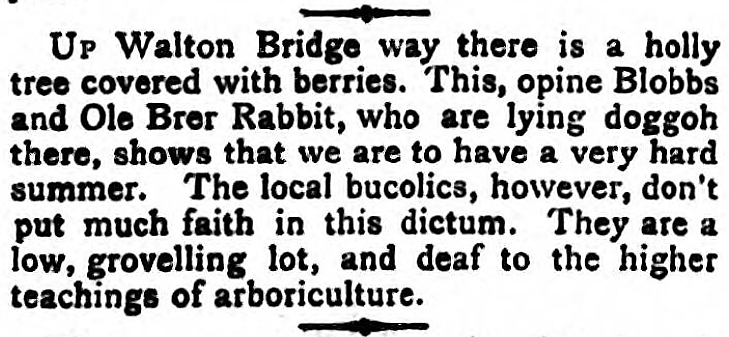
UK, 1882—to remain motionless and quiet; to keep a low profile—probably from ‘dog’ and suffix ‘-o’, with allusion to the characteristically light sleep of a dog
Read More word histories