‘dinnyhayser’: meanings (and origin?)
Australia, 1878—a knockout blow; anything of exceptional size or force—allegedly alludes to a boxer called Dinny Hayes—but no evidence supports this allegation
Read More
“ad fontes!”
Australia, 1878—a knockout blow; anything of exceptional size or force—allegedly alludes to a boxer called Dinny Hayes—but no evidence supports this allegation
Read MoreNew Zealand, 1885; Australia, 1897—to make a good impression on a person, to ingratiate oneself, to improve one’s position—refers to the children’s game of marbles
Read MoreUK, 1872—humorous—to obstruct a person’s view—chiefly used in ‘you make a better door than (a) window’, addressed to one who obstructs the speaker’s view
Read MoreUSA, 1922—flappers’ slang: the sum of money that a flapper carried as a precaution so as not to be left financially helpless in case she and her boyfriend got ‘mad’ at each other while on a date
Read More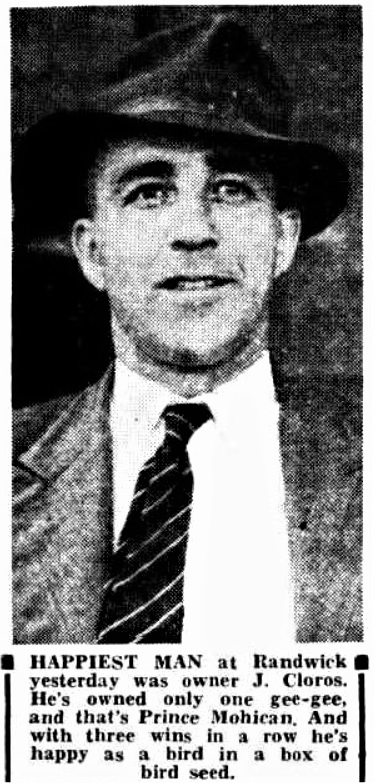
Australia and New Zealand, 1939—to be in good spirits, ‘chirpy’—the image is of a boxful of chirping birds (cf. the extended form ‘happy as a bird in a box of birdseed’)—New-Zealand variant ‘to be a box of fluffy ducks’, also ‘to be a box of fluffies’
Read MoreAustralia, 1863—originally referred to any chain of communications by which bushrangers were warned of police movements—soon extended to any rapid informal network by which information, rumour, gossip, etc., is spread
Read Morethe three traditional interests of the stereotypical New-Zealand man—but also applied to both sexes—1962 or 1963 as the title and in the lyrics of a song by the New-Zealand singer-songwriter Rod Derrett
Read More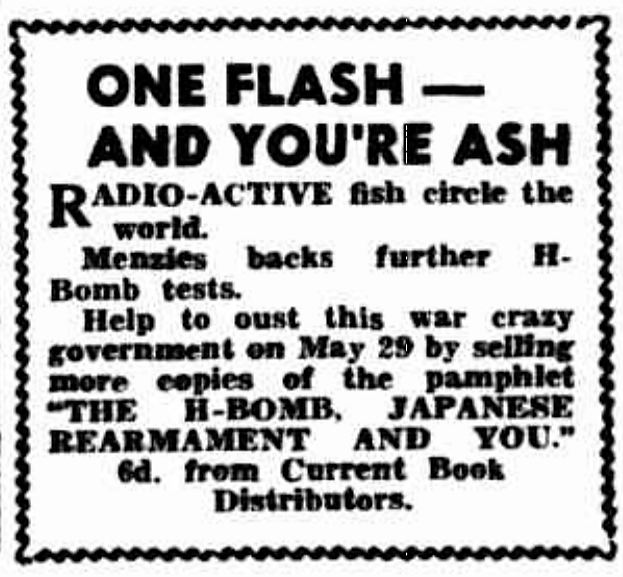
Australia, 1953—slogan used by opponents of nuclear weapons—also used in New Zealand
Read More
Australia and New Zealand 1913—alludes to horse racing, in which a horse wins a race by being the first to pass the finishing post
Read Morefrom 1857 onwards in Australian newspapers, but apparently of Irish-English origin—the forename ‘Larry’ was probably chosen as a jocular reinforcement, a variant reduplication, of the adjective ‘happy’
Read More
