a person or thing, initially ugly or unpromising, that changes into something beautiful or admirable—New Zealand, 1848—from Hans Christian Andersen’s story about a supposed ugly duckling that turns out to be a swan
the practice of coasting downhill in a motor vehicle, with the engine disengaged—USA, 1949, lorry-drivers’ slang—one of the phrases in which ‘Mexican’ denotes basic devices or processes compared unfavourably with more advanced equivalents
Australia, 1834—used in various phrases, in particular as a type of someone or something in a very bad state or condition—also in the phrase ‘all behind like Barney’s bull’, meaning ‘very delayed’ or ‘backward’—origin unknown
out of one’s mind, extremely annoyed—Australia, 1900; New Zealand, 1907—originally as ‘(as) mad as a snake’, ‘(as) mad as snakes’ and variants—later as ‘(as) mad as a cut snake’
Australia, 1885; New Zealand, 1894—indicates that a person is suffering from bad luck—the implication is that this bad luck is punishment for a crime committed by the person
Australia, 1878—a knockout blow; anything of exceptional size or force—allegedly alludes to a boxer called Dinny Hayes—but no evidence supports this allegation
New Zealand, 1885; Australia, 1897—to make a good impression on a person, to ingratiate oneself, to improve one’s position—refers to the children’s game of marbles
UK, 1872—humorous—to obstruct a person’s view—chiefly used in ‘you make a better door than (a) window’, addressed to one who obstructs the speaker’s view
USA, 1922—flappers’ slang: the sum of money that a flapper carried as a precaution so as not to be left financially helpless in case she and her boyfriend got ‘mad’ at each other while on a date
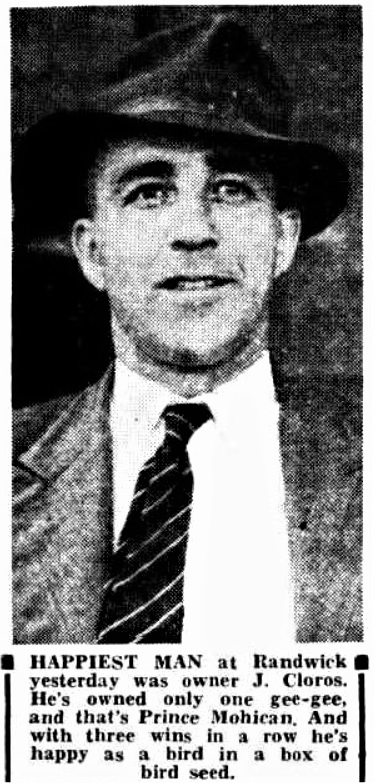
Australia and New Zealand, 1939—to be in good spirits, ‘chirpy’—the image is of a boxful of chirping birds (cf. the extended form ‘happy as a bird in a box of birdseed’)—New-Zealand variant ‘to be a box of fluffy ducks’, also ‘to be a box of fluffies’

 word histories