‘Frankenstein’s monster’: meaning and origin
also ‘Frankenstein’—a creation over which the creator loses control, eventually being destroyed by it—UK, 1822—alludes to ‘Frankenstein; Or, The Modern Prometheus’ (1818), by Mary Shelley
Read More
“ad fontes!”
also ‘Frankenstein’—a creation over which the creator loses control, eventually being destroyed by it—UK, 1822—alludes to ‘Frankenstein; Or, The Modern Prometheus’ (1818), by Mary Shelley
Read MoreUSA—(1957) of computer data: incorrect or poor-quality input will produce faulty output—also applied (1964) to processes likened to computerised data processing
Read Moreto acknowledge merit or achievement when it is deserved, even if one is reluctant to do so—UK, 1783
Read More(literally): to fall heavily; (figuratively): to fail completely—UK, 1847—‘cropper’ may be derived from ‘crop’ in the phrase ‘neck and crop’ (1791), which originally referred to a heavy fall
Read More
a rebuke given in private by a wife to her husband—1625—from the idea that, in order to conduct herself properly, a wife was to rebuke her husband in secret only, i.e., in the privacy of their curtained bed
Read More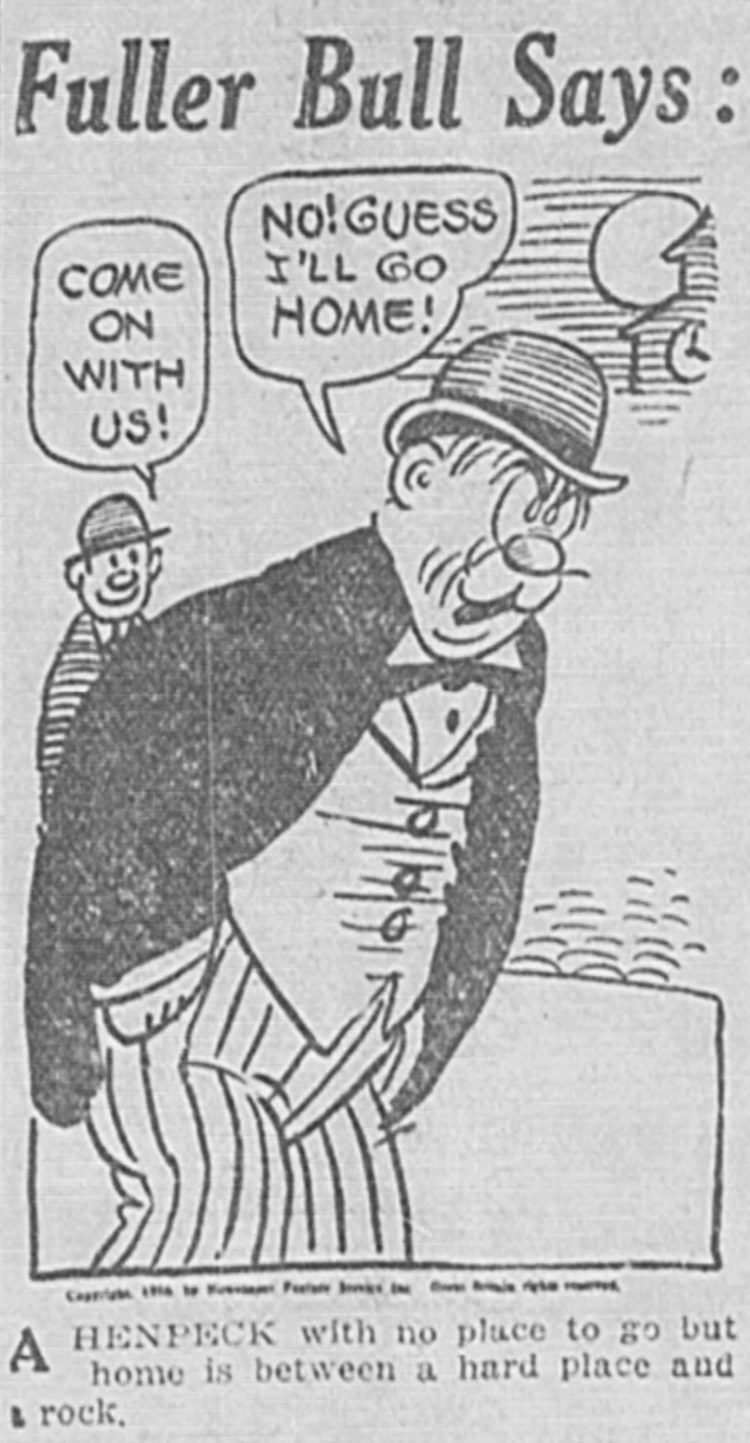
faced with two equally difficult alternatives; in a dilemma—USA, 1914
Read Moresoldiers, especially low-ranking recruits, collectively regarded as expendable in war—UK, 1740—coined by William Shakespeare in Henry IV, Part 1 (1598)
Read Moresoldiers regarded simply as material to be expended in war—‘cannon fodder’ (1847), said to have been coined after German ‘Kanonenfutter’—French ‘chair à canon’ (1814), first used in reference to Napoléon Bonaparte
Read Moreused as an interjection to assert truthfulness, honour or sincerity—USA, 1851, as ‘honest Indian’—perhaps alludes to the fact that, in their past interactions with Europeans, Native Americans had to give assurance of their good faith
Read MoreAustralia, 1927—alteration of ‘blanc’ in French ‘vin blanc’ (‘white wine’)—via rhyming slang forms such as ‘plinketty-plonk’, from phrases such as ‘vin blank’ in the slang of soldiers stationed in France during WWI
Read More
