British English, armed forces, 1936—With reference to the bluebottle fly, the colloquial phrase ‘like a blue-arsed fly’ is used to describe someone engaged in constant, frantic activity or movement.
first recorded in the United Kingdom in 1914, with reference to the civilizational implication of the German invasion of Belgium at the beginning of World War One; therefore, not first used by Orson Welles in Citizen Kane (1941)
UK, 1797—strength or confidence gained from drinking alcohol—alludes to the drinking habits ascribed to the Dutch—one of the phrases in which ‘Dutch’ is used derogatorily, largely because of the enmity between the English and the Dutch in the 17th and 18th centuries
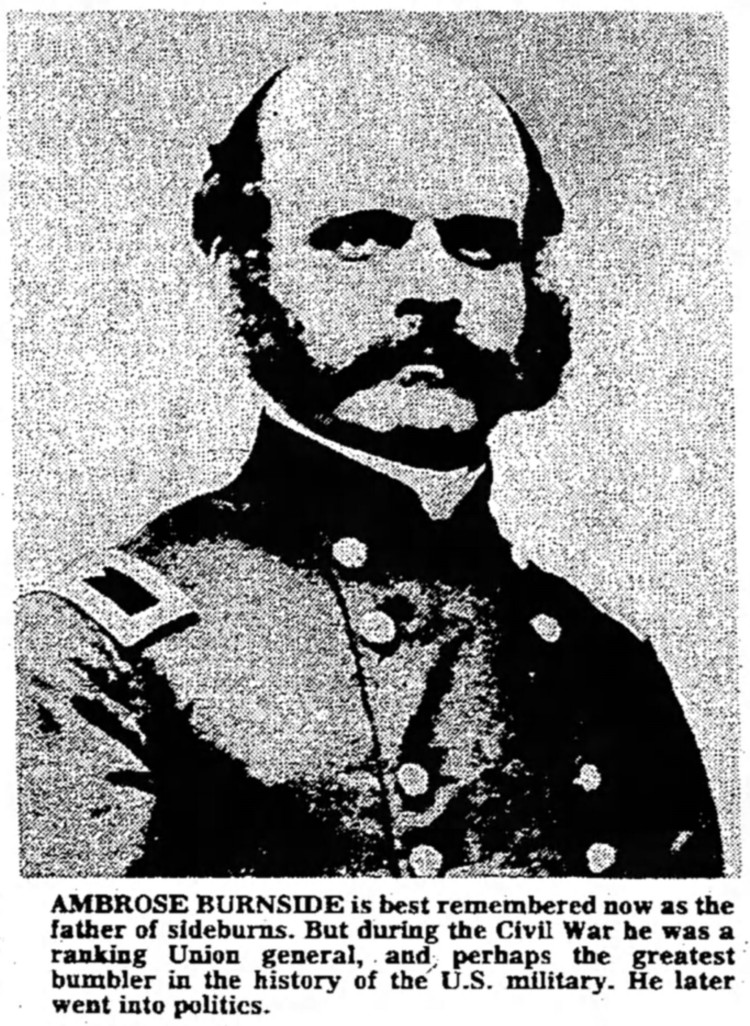
After Ambrose Burnside, Union general in the U.S. Civil War, ‘burnsides’ (1866) denotes thick side whiskers worn with a moustache and clean-shaven chin; on the pattern of ‘side whiskers’, it was altered to ‘sideburns’ (1875), itself altered to ‘sideboards’ (1882).
The noun ‘wolf whistle’ appeared in the USA in 1943—Wolf-whistling was popularised by the wolf, a cartoon character created by Tex Avery in Little Red Walking Hood (1937), which reappeared in Red Hot Riding Hood (1943).
Classical Latin ‘muscŭlus’, literally ‘a little mouse’, also denoted ‘a muscle of the body’, especially of the upper arm, from the resemblance of a flexing muscle to the movements made by a mouse; ‘muscŭlus’ was also used in the sense of ‘mussel’.
First recorded in The Leeds Mercury (Leeds, Yorkshire) of Friday 26 August 1938, the phrase ‘to use one’s loaf’ means ‘to use one’s common sense’. Here, ‘loaf’, a shortening of ‘loaf of bread’, is rhyming slang for ‘head’.
USA, 1811—based on the three principal components that make up a flintlock gun: ‘lock’ denotes the firing mechanism, ‘stock’ the handle or wooden shoulder-piece to which it is attached, and ‘barrel’ the tube down which the bullet is fired
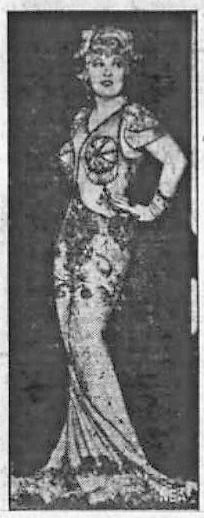
From the name of the American film actress Mae West, renowned for her generous bust, the informal noun ‘Mae West’, attested in 1940, denotes an inflatable life jacket, originally as issued to Royal Air Force aviators during World War II.
U.S., 1876—‘bulldozers’: members or supporters of the Democratic Party who used threats and acts of violence in order to prevent Afro-Americans from voting for Republican candidates