USA, 1811—based on the three principal components that make up a flintlock gun: ‘lock’ denotes the firing mechanism, ‘stock’ the handle or wooden shoulder-piece to which it is attached, and ‘barrel’ the tube down which the bullet is fired
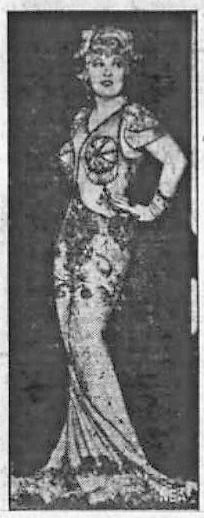
From the name of the American film actress Mae West, renowned for her generous bust, the informal noun ‘Mae West’, attested in 1940, denotes an inflatable life jacket, originally as issued to Royal Air Force aviators during World War II.
U.S., 1876—‘bulldozers’: members or supporters of the Democratic Party who used threats and acts of violence in order to prevent Afro-Americans from voting for Republican candidates
UK, early 19th century—private property taken from an enemy in war—originally an Anglo-Indian noun, from Hindi ‘lūṭ’, from Sanskrit ‘luṇṭh-‘, ‘to rob’—came to be also used as slang for ‘money’ and to also denote ‘wedding presents’
British English, first recorded, apparently as army slang, in 1945—probably from ‘bonk’ (= a blow on the head) and the suffix ‘-ers’ as in ‘ravers’ (from ‘raving mad’) and ‘starkers’ (from ‘stark mad’)
The phrase ‘boys in the backroom’, or ‘backroom boys’, appeared in the 1920s as a U.S. political term denoting persons exercising a surreptitious influence. The Oxford English Dictionary is therefore mistaken in saying that it originally denoted, in 1941, persons engaged in research.
‘Backward in coming forward’ means ‘reluctant, shy to do something’. The earliest instances that I have found are about funds set up in order to provide aid to soldiers wounded during the Napoleonic Wars.
During the Cold War, especially in the context of a possible nuclear war, ‘better red than dead’ was used to warn against uncompromising opposition to communism, while ‘better dead than red’ was used to express unconditional opposition to communism.
from army use on the Western Front during World War One: ‘cootie’, ‘body louse’, ‘cooty’, ‘infested with lice’, ‘coot’, ‘louse’, probably ultimately refer to the aquatic bird called ‘coot’, reputed to be lice-infested
some characteristic slang creations of the British, U.S. and French soldiers during World War One, as recorded in ‘Trench Talk’, published in Everybody’s Magazine (New York) of January 1918

 word histories