the name of a decree issued in Nazi Germany in December 1941, under which individuals suspected of resistance or other underground activities were arrested and deported suddenly and without trace, frequently during the night—by extension: any situation, event, etc., characterised by mystery, obscurity or secrecy
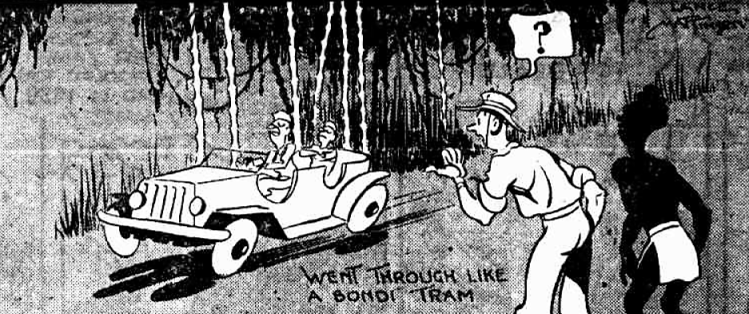
Australia, 1940—means ‘speedily’—refers to the tram service between Sydney, New South Wales, and Bondi Beach, a popular beach located 4 miles east of Sydney city centre
reply to any request for somebody’s whereabouts—Australia, 1944: slang of the Australian armed forces during WWII—original meaning: absent without leave
Australia and U.S.A, 1944—purportedly applied by the British and the Australians to the U.S. soldiers stationed in their respective countries during World War II—British self-deprecating retort: ‘underpaid, underdressed, undersexed and under Eisenhower’
UK, 1938—old-fashioned informal British-English adjective meaning ‘in good order’, ‘fine’—origin obscure: perhaps from Hindi ‘ṭhīk hai’ (‘all right’) or from ‘the ticket’ (‘the correct thing’); or it may simply be a purely fanciful formation
derisive appellation given to Australian Rules (football), because the ball is often kicked high into the air, requiring players to leap and catch it—Australia, 1945—slang of the Australian armed forces during World War II
UK, 1710—in ease and luxury—refers to the use of clover as fodder, as explained by Samuel Johnson in A Dictionary of the English Language (1755): “To live in Clover, is to live luxuriously; clover being extremely delicious and fattening to cattle.”
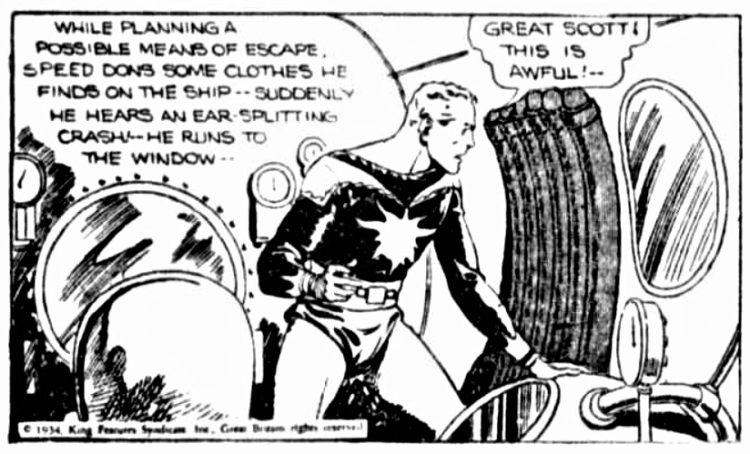
Australia, 1938—beset with extraordinary difficulties—refers to Speed Gordon, the Australian name of Flash Gordon, the hero of the eponymous space-opera comic strip first published in 1934
Australia, 1941—used of any adverse situation—based on the rhyme between ‘crook’ (meaning ‘bad’, ‘unpleasant’, ‘unsatisfactory’) and ‘Tallarook’, the name of a town in Victoria—sometimes followed by ‘there’s no work in Bourke’