‘cakehole’: meaning and origin
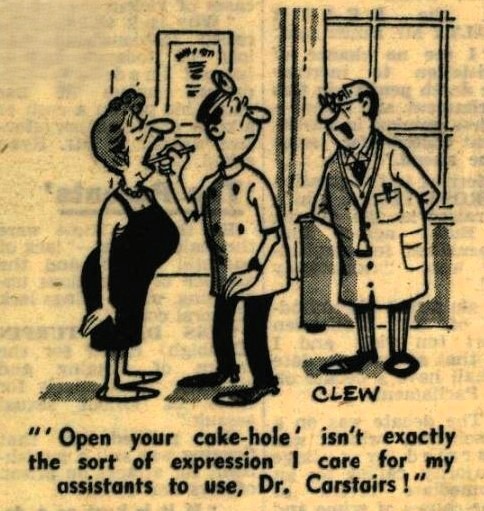
a person’s mouth—British-Army slang, 1916
Read More
“ad fontes!”
a person’s mouth—British-Army slang, 1916
Read More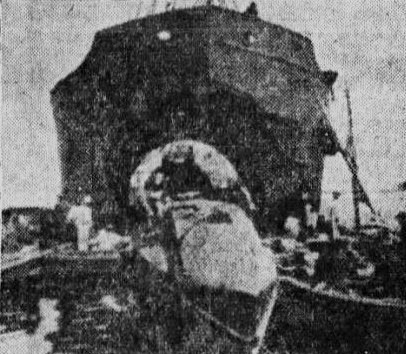
1910s—a ship designed to carry submarines—likens the submarines carried in such ships to the immature young nursed in the abdominal pouch of female kangaroos
Read Morea game in which players must obey a leader’s instructions if, but only if, they are prefaced with the words ‘O’Grady says’—UK, 1917—game invented during World War One as a play-way for conducting physical exercises and drill in the British Army
Read Moreearly 19th century—pandemonium, great trouble or difficulty—often in ‘to kick up hell’s delight’, meaning: to cause a great deal of trouble or difficulty
Read MoreAustralia—1897: the typical bushman—1915: the typical Australian private soldier—a blend of the male forenames ‘Bill’ and ‘Jim’, as often used of bushmen
Read MoreUSA—1941 (slang of the Marines): a state of disorder or confusion—1959 (High-School slang): a prank in which the occupants of a vehicle which has temporarily come to a stop must jump out, run around the vehicle and get back in
Read MoreUK, 1848: a tendency to ‘talk shop’—UK, 1854: something that is characteristic of a shop displaying various kinds of goods (i.e., something that is composed of disparate commonplace elements)
Read Morea narrow escape from danger, disaster or mishap—UK, 1820—refers to the act of shaving with a cutthroat razor, which may result in injury
Read More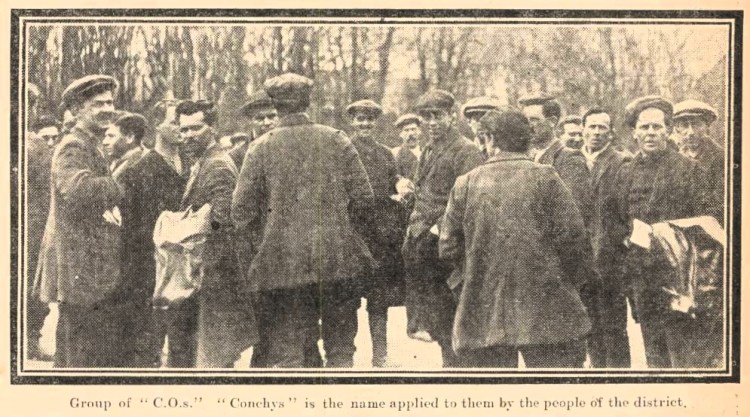
a conscientious objector—UK, 1916—from the initial syllable of the noun ‘conscientious objector’ and the suffix ‘-ie’, used to form familiar diminutives
Read Morethree daily meals plus a bed for the night (i.e., basic food and shelter)—USA, 1929—chiefly used in relation to the military, prison, and shelters for homeless people—‘hot’ designates a hot meal
Read More word histories