‘a snowball’s chance in hell’: no chance at all (USA, 1880)—elliptically, ‘a snowball’s chance’ (USA, 1895)—in the 1880s, ‘a snowball in hell’ was also used as a term of comparison to denote something that disappears rapidly
meaning: ‘thoroughly dejected or disappointed’—appeared (1973) in Tyne and Wear (north-eastern England)—originated apparently in football parlance, in which it soon became a cliché
robotically conformist or obedient—from The Stepford Wives (1972 novel by Ira Levin and 1975 film adaptation by Bryan Forbes), in which Stepford is the name of a superficially idyllic suburb where the men have replaced their wives with obedient robots
USA, 1930—‘to crawl, or to come, out of the woodwork’: of an unpleasant or unwelcome person or thing, to come out of hiding, to emerge from obscurity; the image is of vermin or insects crawling out of crevices or other hidden places in a building
Originally, the mother was the object of ‘deliver’, the image was of delivering (freeing) her from the burden of pregnancy. Nowadays, the healthcare provider or the mother is the subject, the image is of delivering (handing over) the baby, as if it were a package.
First recorded in 1694, ‘Peg Tantrum’ was chiefly used in the phrase ‘to go to Peg Trantum’s’, meaning ‘to go to one’s death’. This word is perhaps from ‘Peg’, rhyming form of ‘Meg’, pet form of the female forenames ‘Margery’ and ‘Margaret’, and from ‘tantrum’.
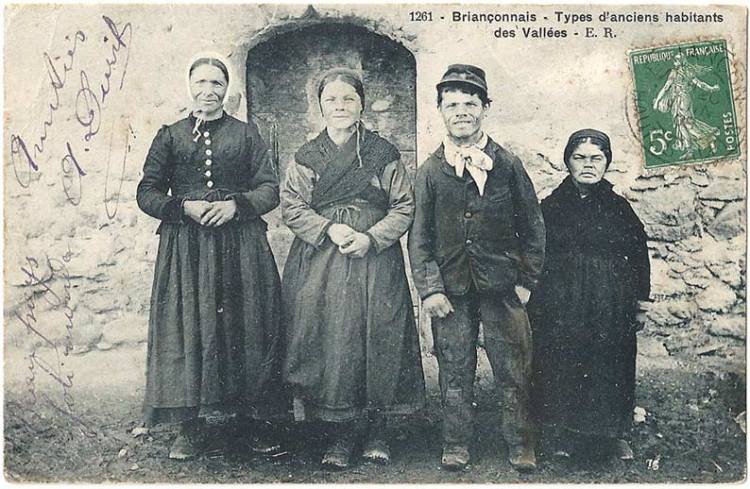
Swiss-French ‘crestin’ (= ‘Christian’): in certain valleys of the Alps, a mentally deficient, deformed person suffering from a congenital thyroid deficiency
The word ‘folklore’ was coined in 1846 by the British author William John Thoms, inspired by Jacob and Wilhelm Grimm’s anthology of German fairy tales.
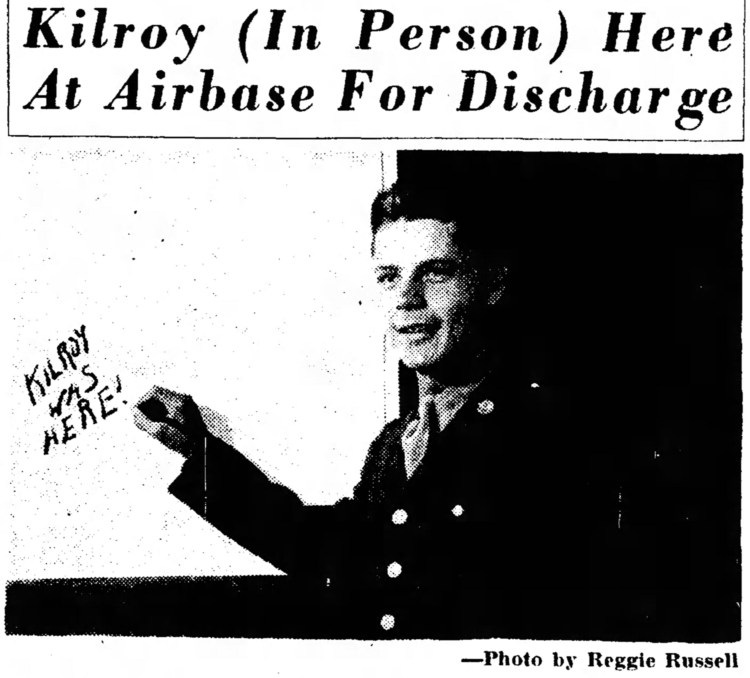
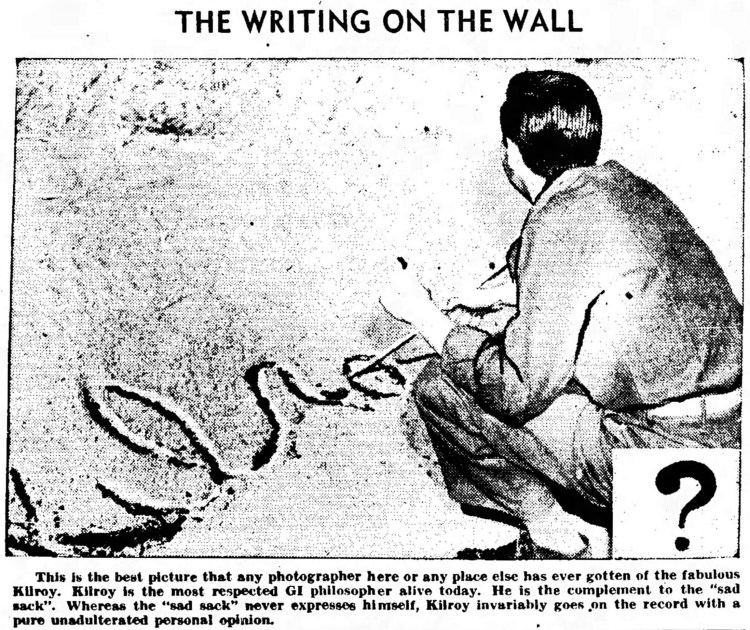
Sgt Francis J. Kilroy’s surname, first written in 1943 by his friend Sgt James Maloney (source: Army Public Relations, in the Tucson Daily Citizen, 8 Nov. 1945)