meaning and origin of the football term ‘Tartan army’
England, 1971—(informal, humorous) the fans of the Scottish football team, considered as a group
Read More
“ad fontes!”
England, 1971—(informal, humorous) the fans of the Scottish football team, considered as a group
Read MoreScotland, 1749—from the idea of daring to grab a lion’s “beard” and figurative uses of ‘beard’: (verb) ‘confront’ – (noun) ‘face’
Read Moreultimately based on the fable of the mice, or rats, who proposed to hang a bell round the cat’s neck, so as to be warned of its approach
Read MoreThe adjective ‘living’ is an intensifier, and ‘daylights’ is an 18th-century slang term for ‘eyes’ chiefly used in contexts of physical violence or threats.
Read Moreappeared as a London catchphrase in 1897—not from the title and refrain of an 1898 song
Read More‘lion’: a person of note or celebrity who is much sought after—from ‘lions’: things of note, celebrity, or curiosity in a town, etc.—from the practice of taking visitors to see the lions which used to be kept in the Tower of London
Read More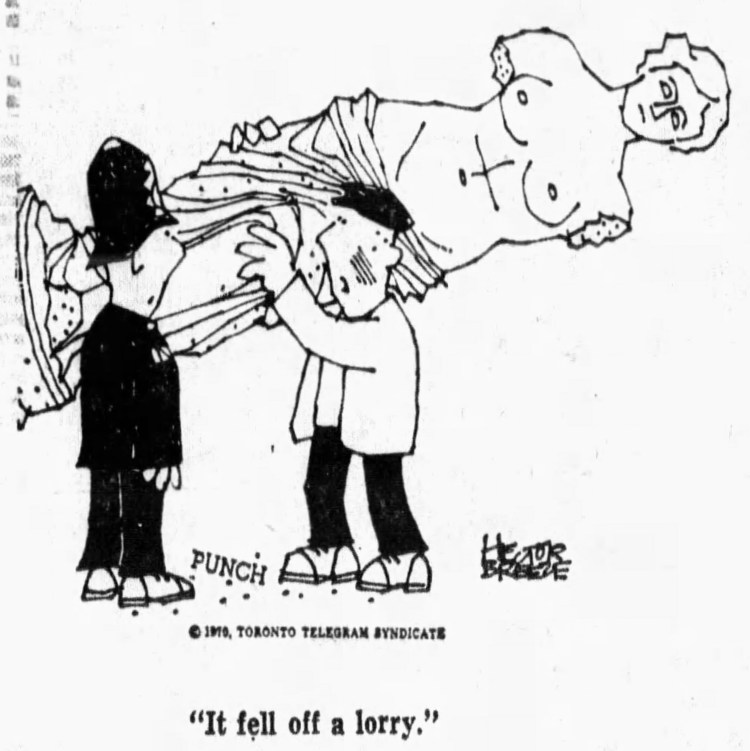
UK, 1953, humorous and euphemistic—‘to fall off (the back of) a lorry’: of goods, ‘to be acquired in dubious or unspecified circumstances’, especially ‘to be stolen’—variant with ‘truck’ came into use later in Australian and North American English
Read More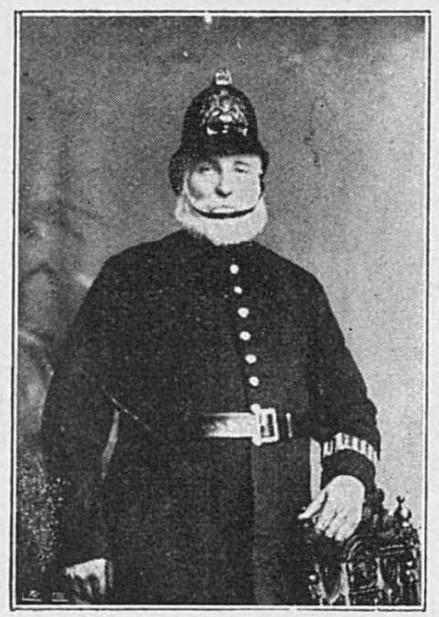
UK, 1844—‘bobby’: a policeman—from ‘Bobby’, pet form of ‘Robert’, in allusion to Robert Peel, who, as Home Secretary, established the Metropolitan Police in 1829—cf. ‘peeler’ (1816), originally a member of the Peace Preservation Force in Ireland established in 1814 by Robert Peel
Read More‘Backward in coming forward’ means ‘reluctant, shy to do something’. The earliest instances that I have found are about funds set up in order to provide aid to soldiers wounded during the Napoleonic Wars.
Read MoreEtymologically, a jewel is a little game, a little plaything: ‘jewel’ is from a French diminutive of ‘jeu’, meaning ‘a game’, ‘a play’. The word ‘bijou’ is from Breton ‘bizou’, meaning ‘a finger-ring’, from ‘biz’, ‘finger’.
Read More word histories