the authentic origin of ‘the devil to pay’
refers to a person making a pact with the Devil: the heavy price has to be paid in the end—unrelated to the nautical phrase ‘the devil to pay and no pitch hot’
Read More
“ad fontes!”
refers to a person making a pact with the Devil: the heavy price has to be paid in the end—unrelated to the nautical phrase ‘the devil to pay and no pitch hot’
Read Morelate 17th century—probably based on the resemblance between the shape of the heart and that of a cockleshell – or of the body the shell protects
Read More1696—perhaps from ‘latet anguis in herba’ (a snake hides in the grass) in Virgil’s Eclogues—cf. ‘a pad [= toad] in the straw’ and French ‘il y a de l’oignon’
Read More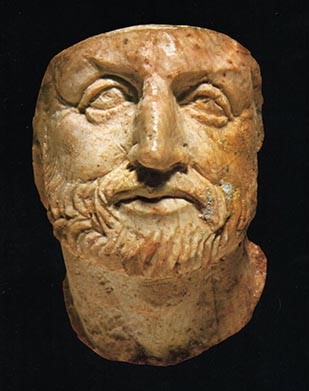
from the story of a woman who, having been unfairly judged by King Philip of Macedon while he was drunk, urged him to reconsider his decision when sober
Read More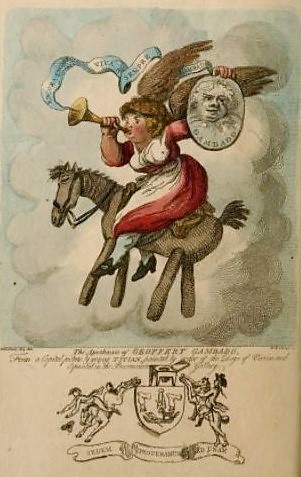
from Medieval Latin ‘paraphernalia’, short for ‘paraphernalia bona’, ‘married woman’s property’, i.e. the goods which a bride brings over and above her dowry
Read MoreThe word ‘oxymoron’ has the property it denotes: it is from Greek ‘oxús’, meaning ‘sharp’, ‘acute’, and ‘mōrόs’, meaning ‘dull’, ‘stupid’.
Read MoreVia Irish ‘póg’, Irish-English ‘pogue’ (a kiss) is from ecclesiastical Latin ‘pacem’ (kiss of peace)—the name of the band is from ‘pogue mahone’ (kiss my arse).
Read More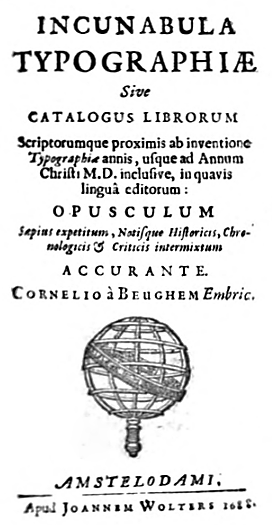
Latin ‘incunabula’: ‘swaddling clothes’, hence ‘beginning’—denotes the early printed books (from the 1450s to the end of the 15th century)
Read More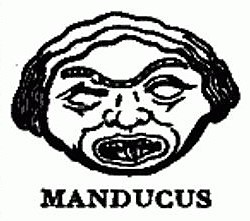
In Latin, short words having complicated irregularities in their forms gave way to simpler words with regular patterns and longer phonetic individualities.
Read More
early 18th century—from the name of the Roman orator and author Marcus Tullius Cicero, apparently in allusion to the eloquence and learning of these guides
Read More word histories