‘buyer’s remorse’: meanings and origin
USA, 1946—a feeling of regret experienced after making a purchase—also, in extended use: a feeling of regret experienced after voting for a particular person or programme
Read More
“ad fontes!”
USA, 1946—a feeling of regret experienced after making a purchase—also, in extended use: a feeling of regret experienced after voting for a particular person or programme
Read More1785—Britain and Ireland—meaning: ‘more harshness than kindness’
Read MoreIreland, 1803—the provision of a bed for the night and breakfast the following morning, especially at a fixed rate, in a hotel, inn, or private home
Read MoreUSA, 1885—a condition of carefreeness, of ease, usually one marked by financial security—also (USA, 1889) in sporting contexts, a situation where winning will be easy
Read MoreUSA, 1866—the capacity to eat or drink a lot without ill effects
Read Morea person who believes that the planet Earth is flat—USA, 1896—earlier synonym: ‘flat-earth man’ (UK, 1872) applied to John Hampden (1819-1891)
Read Morea person exercising an insidious or corrupting influence, especially over a ruler, government, etc.—UK, 1917—refers to Grigori Efimovich Rasputin (circa 1869-1916), mystic and influential favourite at the court of Tsar Nicholas II
Read More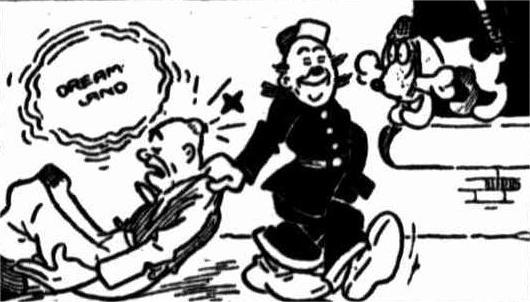
a police station—USA, 1882—here, the noun ‘cop’ designates a police officer and the noun ‘shop’ designates the place where one works
Read MoreUK, 1923—the north-east corner of Hyde Park, London, near Marble Arch, where public speaking and debate are traditionally permitted with minimal restriction—by extension: any location where public speaking and debate are permitted or encouraged
Read MoreUK, 1867—a disastrous or particularly unpleasant year—Latin, literally ‘a horrible year’—coined after Latin ‘annus mirabilis’, literally ‘an extraordinary year’
Read More
