notes on ‘see you later, agitator’

USA, 1956—jocular variant of equally jocular ‘see you later, alligator’ (1952)—recoined on separate occasions by various persons, independently from one another
Read More
“ad fontes!”
USA, 1956—jocular variant of equally jocular ‘see you later, alligator’ (1952)—recoined on separate occasions by various persons, independently from one another
Read More
used ironically of something regarded as prosaic or even thoroughly vulgar—USA, 1869—‘romance’: romantic love idealised for its purity or beauty
Read More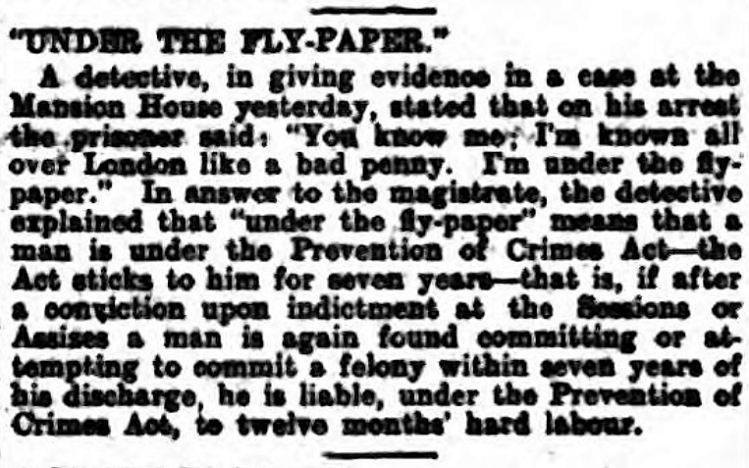
UK slang, 1906—‘Flypaper Act’: the Prevention of Crimes Act—‘to be under, or on, the flypaper’: to be subject to the Prevention of Crimes Act
Read More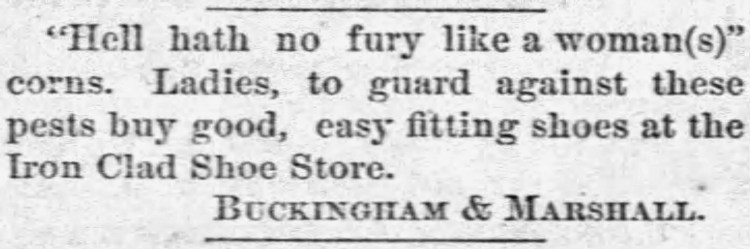
Ireland, 1845: ‘hell has no fury like a woman corned’—puns on ‘hell hath no fury like a woman scorned’, which refers to Congreve’s ‘The Mourning Bride’ (1697)
Read More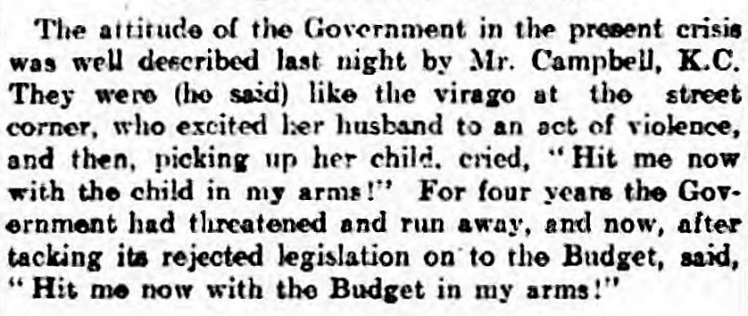
Irish-English phrase—first recorded in 1892—used to express pretended fear of, and/or provocation to, a physical attack
Read More
1) a seemingly devout or respectable person who lacks virtue—2) (with a pun on ‘holey’, i.e., full of holes) jocularly applied to holey things such as clothes
Read More
used of a person whose display of distress misleads others into underestimating this distress—UK, 1962—from ‘Not Waving but Drowning’ (1954), by Stevie Smith
Read More
extremely slow—USA, 1874—in Christian theology, the Second Coming of Christ is the prophesied return of Christ to Earth at the Last Judgement
Read More
USA, 1878—someone who behaves exemplarily in public, but who is abusive in private life—calque of German ‘Strass-Engel Haus-Teufel’
Read More
UK, 1935—to conduct oneself adroitly (‘clever’: adverb meaning ‘skilfully’)—originated in boxing
Read More word histories