‘excuse-me dance’: meaning and early occurrences
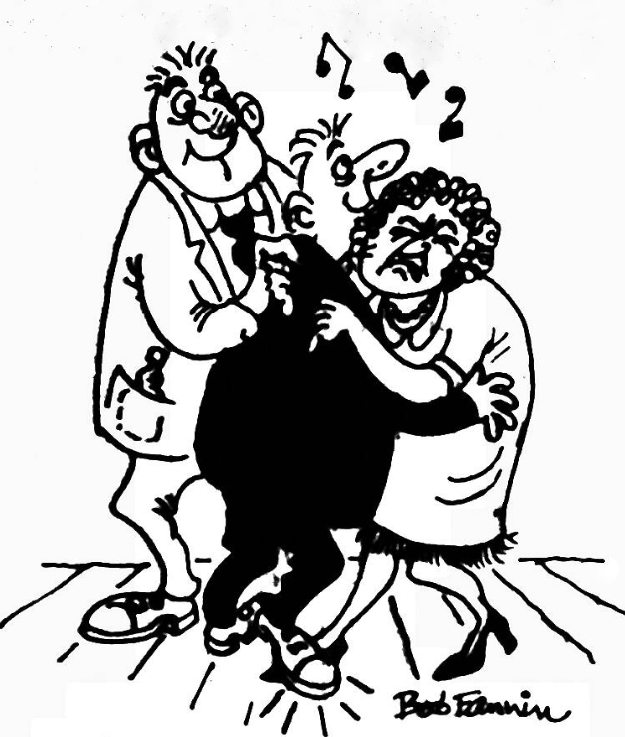
UK and Ireland—a dance in which one may supersede a partner—first recorded in 1923—but the expression ‘excuse-me waltz’ had occurred in 1922
Read More
“ad fontes!”
UK and Ireland—a dance in which one may supersede a partner—first recorded in 1923—but the expression ‘excuse-me waltz’ had occurred in 1922
Read Moresomething of no value, something to which one is utterly indifferent—UK, 1785—derives from a misinterpretation of “Worth makes the Man, and Want of it the Fellow;/The rest, is all but Leather or Prunella.” in An Essay on Man (1734), by Alexander Pope
Read Morea country characterised by absurdity—originally used of Czechoslovakia—the suffix ‘-istan’ (in country names such as ‘Pakistan’) is used as the second element in satirical names denoting, in particular, ‘a country characterised by [the first element]’
Read Moresuicide committed by a person, especially a child or young adult, as a result of being bullied—blend of the nouns ‘bully’ and ‘suicide’—coined since 2001 on separate occasions by various persons, independently from one another
Read MoreUK, 1972—the nouns ‘granny-bashing’ and ‘granny-battering’ denote: a) the assault or mugging of elderly persons; b) abuse of an elderly member of one’s family, especially one’s grandmother
Read Moremeans ‘backwards’, also ‘reluctantly’—USA, 1865—of unknown origin—allegedly borrowed from Irish English, but nothing seems to support this allegation
Read MoreUK, 1872—humorous—to obstruct a person’s view—chiefly used in ‘you make a better door than (a) window’, addressed to one who obstructs the speaker’s view
Read MoreAustralian English, 1848: any urban area (said to be of Aboriginal origin)—Irish and British English, 1862: Dublin and London—alludes to smoke as characteristic of an urban area
Read More1842—The noun ‘patter’ denotes the sound of light footfall, and the phrase ‘the patter of tiny feet’, and its variants, denote the presence of one or several young children, or the imminent birth of a child.
Read Moreto surpass everything—Ireland, 1821—probably refers to a strong military fort at Banagher, a town in County Offaly, in the province of Leinster, Ireland
Read More word histories