‘to live in each other’s pockets’: meaning and early occurrences
to live in excessively close proximity or interdependence—1762: “the company squeezed themselves into one another’s pockets” in a letter by Horace Walpole
Read More
“ad fontes!”
to live in excessively close proximity or interdependence—1762: “the company squeezed themselves into one another’s pockets” in a letter by Horace Walpole
Read Moreto be in control of a situation; to be in a dominant position—USA, 1899—originally (USA, 1867) used in reference to hunting game animals
Read More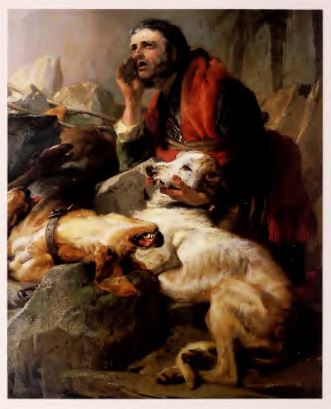
an assertion of continuing competence, strength, etc., notwithstanding evidence to the contrary—from the title of a painting by the British artist Edwin Landseer, first exhibited in 1838
Read Moreearly 19th century—chiefly U.S.—to be forced by another to walk on tiptoe—to walk cautiously—to be discharged or dismissed—to discharge or dismiss (someone)—origin unknown
Read Morevery cunning—New Zealand, 1908—‘Māori dog’: a dog of Polynesian origin; also any mongrel dog associated with Māori settlements or living in a wild state
Read MoreUSA, 1792—to say to a person the things that they want to hear—allegedly from the story of a white man and an Indian who went hunting together, and killed a turkey and a buzzard
Read Moreto make no mistakes at all—UK, 1864—this phrase was originally used of racehorses and hunting horses
Read More(literally): to fall heavily; (figuratively): to fail completely—UK, 1847—‘cropper’ may be derived from ‘crop’ in the phrase ‘neck and crop’ (1791), which originally referred to a heavy fall
Read Moreused of a person who is frozen with fright or surprise, or is trying to flee, as a result of suddenly becoming the focus of attention—alludes to the habit of deer and rabbits of stopping still when dazzled by the headlights of a motor vehicle, or of running away within the headlight beam
Read MoreUSA, 1942—over-ready to shoot at anything at any time or on slight provocation—during and following WWII, ‘happy’ was used as the second element in compound adjectives relating to mental instability associated with the first element
Read More word histories