used of a person who is frozen with fright or surprise, or is trying to flee, as a result of suddenly becoming the focus of attention—alludes to the habit of deer and rabbits of stopping still when dazzled by the headlights of a motor vehicle, or of running away within the headlight beam
‘femiphobia’ (USA) 1907—‘feminophobia’ (UK) 1914—an irrational fear or dislike of women—from Latin ‘fēmina’ (woman) and combining form ‘-phobia’—probably each coined on various occasions by different persons, independently from each other
meaning: ‘extremely tired’—origin (Lancashire, England, 1859): from the noun ‘pow’, variant of ‘poll’, denoting ‘a person’s head’, and the adjective ‘fagged’, meaning ‘extremely tired’
Australia—meaning: (as a verb) to rest or spend time in an aimless, idle way; (as a noun) an instance or period of resting—origin: Army slang, Second World War, from the notion of lying on one’s back
UK, 1969—a young man of a working-class subculture, characterised by close-cropped hair, heavy boots and functional clothing, and behaving in an aggressive or violent way—‘bovver’ represents a nonstandard pronunciation of ‘bother’
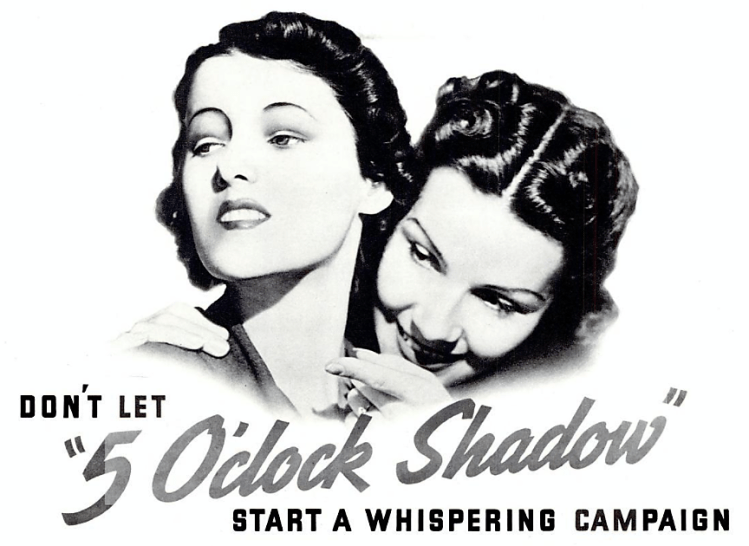
the beard growth which becomes visible in the late afternoon on the face of a man who has shaved earlier in the day—originally (USA, 1937) the catchline of an advertising campaign for Gem Micromatic Razor and Blades
USA, 1888—used as a way of telling someone that they will have to accept a situation they do not like because they have no choice—the noun ‘titty’ denotes a teat, and, in the phrase, the image is of sucking a tough teat
Australian soldiers’ slang, 1917—literally: to fall heavily; figuratively: to suffer a failure or defeat—‘gutser’ (Scotland, 1901): originally denoted a belly flop—derived from ‘gut’ in the sense of the belly